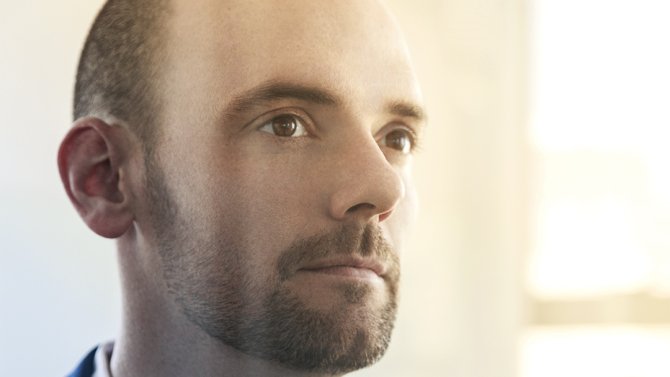
Joe Marchese made his Upfront debut yesterday at the Fox upfront presentation, having just been named the new ad-sales leader for the massive Fox Networks Group just days before. “It’s a heckuva third day on the job,” he told the packed house of media buyers and advertisers.
Imagine the pressure he might feel as he squares off against a league of video content all-stars spanning digital, cable and network broadcasters. Never has the competition been so fierce for video ad dollars and, perhaps, never has the future loomed so uncertain. And, then, along comes Joe…
Marchese joined Fox Networks Group (FNG) back in December 2014 when he sold the company his digital ad business, TrueX, for reportedly $200 million. The choice to put Marchese in a leadership role with FNG underscores the dramatic shifts in audience attention and media consumption. Traditional interruptive advertising must change and FNG is making a bold statement that they recognize that fact and are betting on a guy who will lead that change for them.
Quoting from a May 10, 2017 Variety article: “This is the start of the hard work,” said Marchese in an interview, indicating that he was eager to come up with new ideas for advertisers at a time when technology has made the act of avoiding or ignoring traditional TV commercials much easier. “We are going to see a new model” of advertising put into place around video content, he said.
This year during Brand Storytelling at Sundance Film Festival, Marchese captured the attention of the brand and agency audience with his thesis that “The Market for the World’s Most Valuable Resource is Broken,” and that resource is attention. This is a fascinating presentation that really simplifies the challenges advertisers and their media partners face today when we don’t value people’s time correctly. Invest 15 minutes of your time to watch this today and tell me if it doesn’t make the media world a little clearer. It’s very insightful thinking from a guy whose big job just got a whole lot bigger.
—
Watch for weekly news updates from Brand Storytelling in your inbox, and share this with other storytellers in your network.
Of course, if you’d like to contribute to the story, We’d love to hear from you. Email us!
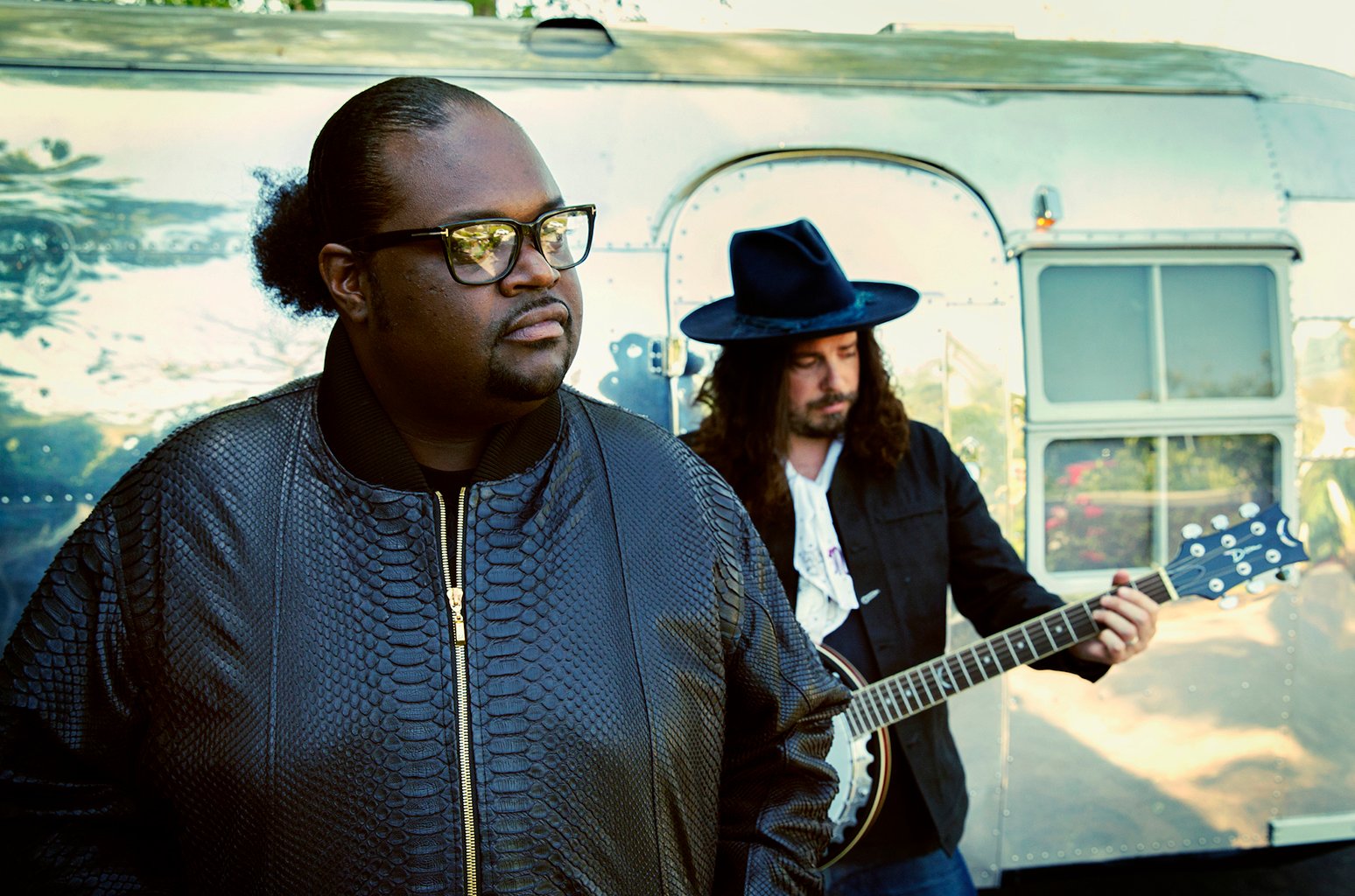
Continuing on with Saturday night’s theme of musical celebration, Brand Storytelling is happy to announce the addition of Bear and a Banjo to the line-up of performances following the screening of MacGillivray Freeman’s “America’s Musical Journey.”
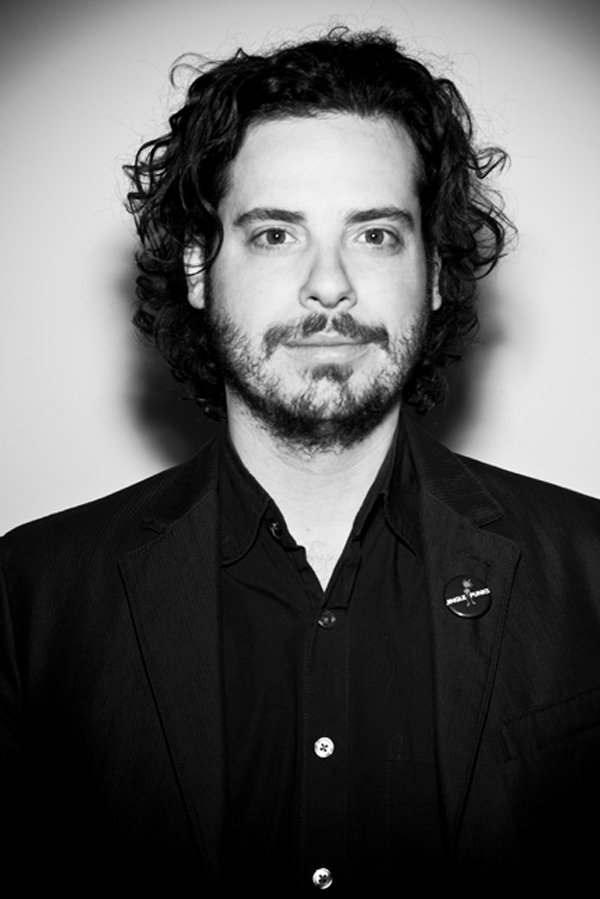
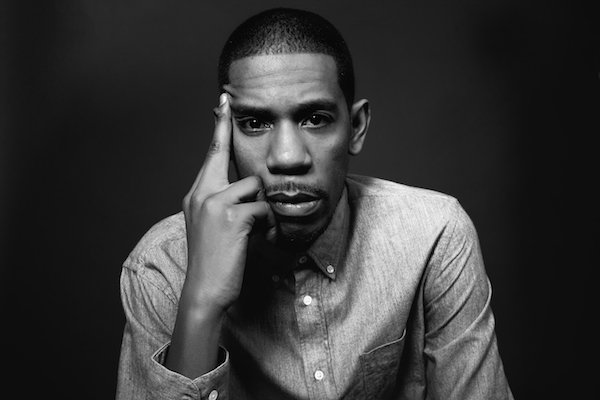
Bear and a Banjo members “Jingle” Jared Gutstadt and Jason “Poo Bear” Boyd will also bring their music and business expertise to our All-Star music panel featuring Young Guru (legendary audio engineer and DJ) and Ray Clark (Founder and CEO of The Marketing Arm). These four experts will discuss music’s powerful ability to define a brand’s identity and imprint emotionally on consumers.
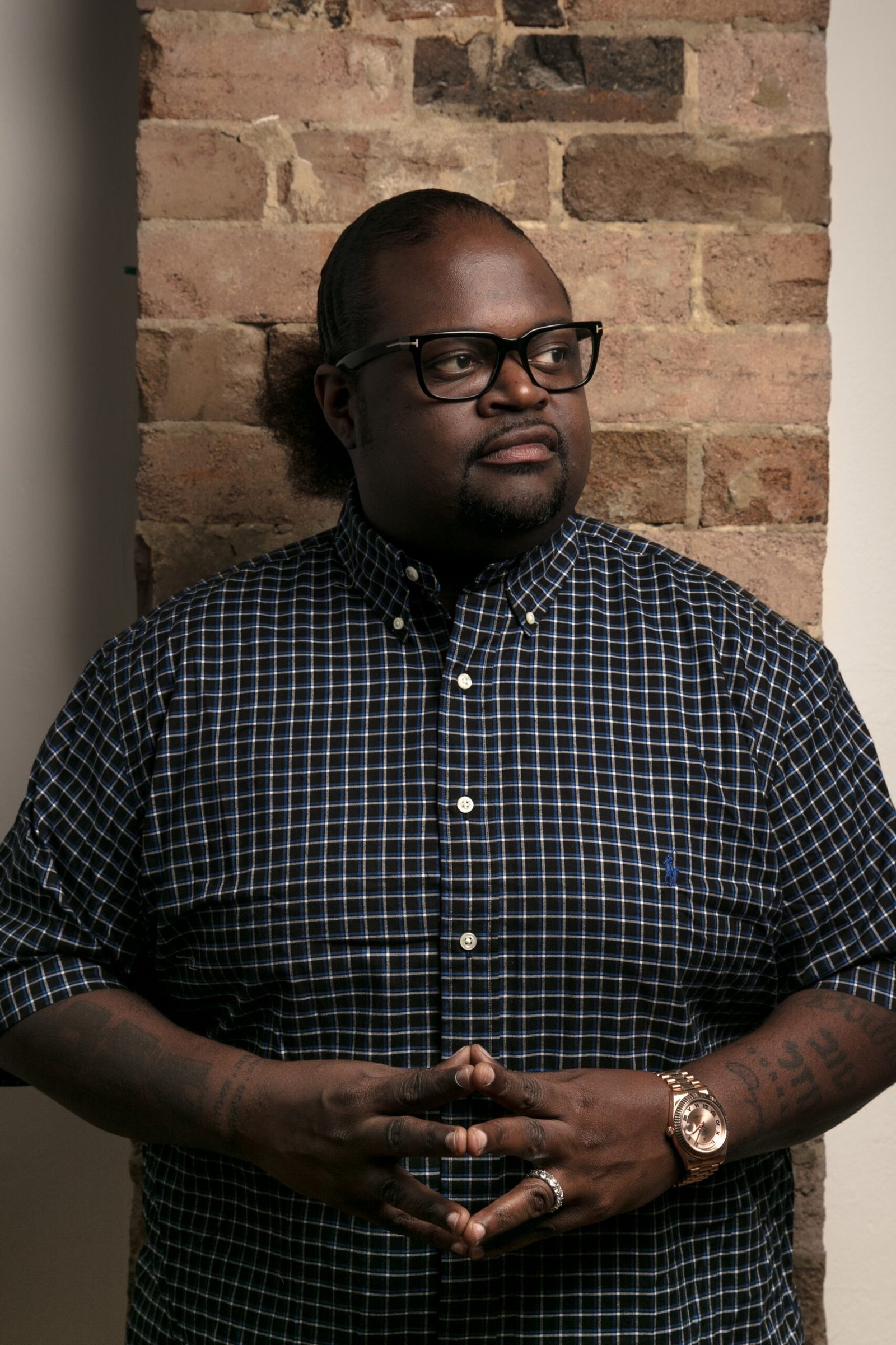
About Jason Boyd A.K.A Poo Bear
Songwriter, Producer:
“Where Are Ü Now,” “What Do You Mean?,” “Peaches and Cream,” “Caught Up”
If you thought you’ve never heard of 4x Grammy award winning singer/songwriter Poo Bear, you actually have! He is the lethal pen behind hits like 112′s ‘Peaches & Cream’ and ‘Anywhere’, Usher’s ‘Caught Up’ and ‘Superstar’, as well as Chris Brown’s ‘She Ain’t You’ and ‘I Can Transform Ya.’ He is best known for being one of Justin Bieber’s main collaborators, having co-written many of Bieber’s hits (including “Where Are Ü Now,” “What Do You Mean?,” “PYD,” “Hold Tight” and “All That Matters”). Jason Boyd aka Poo Bear has undoubtedly redefined the entertainment industry with his innovative, dynamic and empowering abilities to deliver music through the power words.
With his clever blending of various genres of music accompanied by the intricate use of words and harmonies, it is without question that after over 350 million records sold worldwide, he is a force to be reckoned with. The evolution began after the first recorded tornado in Connecticut history left his family homeless. With the gracious donations and fundraising provided by the neighborhood church, Jason’s family moved to Atlanta, Georgia just as the city was evolving into the mecca of the music industry. At the age of 14, Poo Bear co-wrote his first hit single for platinum selling r&b group 112 titled, ‘Anywhere’. This began his unprecedented catalog of songs written for the biggest artists in the world including The Rolling Stone’s, Whitney Houston, Sinead O’Connor, Pink, Kelly Price, Faith Evans, Carl Thomas, Jagged Edge, Glen Lewis, Patti LaBelle, Dr. Dre, Lupe Fiasco, DJ Khaled, Drake, Rick Ross and Justin Bieber just to name a few. Between 2005 and 2008, Boyd collaborated with acclaimed producer Scott Storch, co-producing and writing over 100 songs including top-charted ‘Make It Rain’ by Fat Joe & Lil Wayne, and hits for Kelly Rowland, Mariah Carey, Snoop Dogg, Brooke Hogan, BunB, Yo Gotti, Eve, Kelis and Ruben Studdard. With songs topping the charts and every artist wanting to reap the benefits of Poo Bear’s masterful vocal production, the biggest selling album of the millennium was right around the corner. Poo Bear co-wrote multiple tracks on Usher Raymond’s Confessions album, including the single ‘Caught Up’, awarding him two Grammys and an accolade of other awards. Poo Bear earned his third Grammy for his contributions to Jill Scott’s Words and Sounds: Volume 1 album and his fourth Grammy was for Chris Brown’s FAME album. Poo Bear was also honored with his 7th ASCAP Award for ‘She Ain’t You’ by Chris Brown.
Not only has Poo Bear topped numerous music charts around the world, but he has commanded the attention of the feature film and television industries by lending his talents to Sean P Diddy Combs for his series ’Making the Band’, writing songs for Danity Kane, in addition to 8Ball&MJG for the soundtrack for the acclaimed feature film ’The Fast and the Furious’. Poo Bear’s reputation for being a consummate professional has awarded him the opportunity to work abroad with legendary musicians Jah Cure, Mavado, David Guetta, Swedish House Mafia and iconic DJ Paul Oakenfold. Poo Bear also co-wrote and produced 10 singles on Justin Bieber’s Journals album with each single spending significant time as number one on iTunes. After nearly two decades of being behind the scenes and imprinting music with his dynamic skills, Poo Bear’s journey has led him to center stage. Recently, he worked on Justin Bieber’s 4x Platinum selling album “Purpose” where he co-wrote 16 out of the 19 tracks. Following that, his track with Bieber ‘Where Are Ü Now” won the Grammy for best dance song – and he wrote the Pro Bull Riding theme song recorded by Steven Tyler. He also co-wrote a song on the Latin Grammy Award Winning album “Energia” by J Balvin.
About Jared Gustadt
“Jingle” Jared Gutstadt is the President, CCO and co-founder of Jingle Punks, an Audio Creative Agency with offices in Los Angeles, New York, and Toronto. As the lead creative at Jingle Punks, Gutstadt has composed and produced themes and scores for television, including Warner Pictures Lego Ninjago, Youtube Red’s Step Up, History Channel’s reboot of Roots the Mini-Series, The Voice, and ESPN’s Sportscenter, as well as films such as “Ratchet & Clank”, “Eagle Huntress” and the upcoming 89 Blocks produced by LeBron James. Gutstadt has also written song for artists as varied as Lil Wayne, Big K.R.I.T., Steven Tyler, Kris Kristofferson, Dierks Bentley, Brad Paisley, Timbaland and Lynyrd Skynyrd among others. He is also a multiple ASCAP composer of the year and one of the most decorated musicians in TV and film.
Since its 2008 launch, Jingle Punks has revolutionized the commercial music industry, launching innovative partnerships, developing patented proprietary technology, and creating memorable music marketing moments that are the envy of the industry. Jingle Punks has been featured in The Wall Street Journal, USA Today, Billboard, Rolling Stone, Wired, Variety, and Bloomberg Businessweek.
Recently, Jared entered into a creative partnership with world-renowned songwriter Jason “Poo Bear” Boyd to bring their collective skills into the world of TV and film scores, video game soundtracks and branded content. This partnership has already yielded a Sports Emmy nomination and countless brand anthems including the ground-breaking UFC 207 and PBR anthems that featured G-Eazy and Steven Tyler respectively.
Additionally, Gutstadt is the leader of the Hipster Orchestra, a classical chamber group that covers contemporary pop and hip-hop hits yielding a meta-marketing conceit that has drawn accolades from The New York Times and tastemaker site BrooklynVegan. They completed a record deal w Lava/ Universal to build this concept out as a live touring event and will be officially launching in 2018.
Drawing on his experiences as a leader of a successful start-up and also from his days as leader of an up-and- coming indie rock band, Jared has developed The Rock n’ Roll CEO concept, a next level business strategy that has become a series of featured columns in the Huffington Post’s Business section and led to Gutstadt delivering a talk at TEDx Hollywood 2013 in Los Angeles.
About Young Guru
The Wall Street Journal calls Young Guru “the most influential man in hip-hop you’ve never heard of.” Often referred to as “The Sound of New York,” legendary audio engineer, Gimel “Young Guru” Keaton is most known for his work behind the boards with Jay Z. Jay Z would shout out Guru’s name on the records themselves— an unheard of acknowledgement to give to an engineer at the time. Guru’s ability to communicate complex technical terms, not only to artists but students, creatives and business professionals alike, has led to his reputation as the foremost leader bridging the gap between hip-hop and the tech community. Through this love for technology and innovation, Guru cofounded Era of the Engineer – a social enterprise designed to shed light where culture and technology intersect.
Guru’s love of music has always been rooted in technology. As an audio engineer, he has collaborated with some of the biggest brands in the world. For example, Guru explored the effects of sound on athletes with Gatorade, re imagined the sound presentation of first-class aviation experience for BMW Design Group, and was recently featured in his own campaign for Infinity’s Q-60. The Era of the Engineer team and Young Guru serve as mentors to 10 burgeoning startups within Techstar’s inaugural Music Accelerator. Additionally, Guru was appointed the position of the Chief Music Strategist for the ad agency, The Marketing Arm. Furthermore, he was recently acknowledged by Fast Company as 2016’s Most Creative People in Business.
Guru puts in the work on the music side as well: he received two Grammy nominations for his work with Common and Jhené Aiko and continues to help artists such as Jay Z and Alicia Keys to craft their live shows. When he is not in the studio or onstage, Guru DJs all over the world for clubs, private events, and exclusive corporate sets for clients including Google and AT&T.
A lifelong educator at heart, Guru served as the official Artist-in-Residence at USC’s Thornton School of Music where he oversaw the creation of its first-ever Music Production Degree. In 2013, Guru partnered with Hewlett-Packard and The Recording Academy to create The Grammy’s first-ever educational tour, ‘The Era of the Engineer Tour,’ in which he traveled to 13 college campuses, including NYU, MIT, and Cornell University, to speak on “creative engineering”—his cross-disciplinary approach to problem-solving.
About Ray Clark
Ray is the Founder and CEO of The Marketing Arm (TMA). The 25-year-old Consumer Engagement agency is known as one of the most dynamic agencies in the world, with deep Agency of Record status in 14 capabilities, including Promotion, Content, Sports, Entertainment, Music, Cause, Talent, Social, Influencer and a continuum of Experiential and Hospitality services, with many of the capabilities awarded “Agency of the Year.”
The Marketing Arm has over 800 employees and 150 brand clients, including notable brands such as PepsiCo, AT&T, State Farm, Nissan, and Bacardi. In 2017, TMA created and produced 1,000 pieces of branded video content and negotiated 1,500 celebrity deals. Celebrated work includes Doritos Crash the Super Bowl, Pepsi’s Uncle Drew and work on over 50 Super Bowl commercials.
Ray has been married to his wife, Ellen, for 23 years and has two teenage boys, Will and Cal. In his spare time, Ray loves music, tennis, movies and playing sports. His eclectic sense of humor motivates him to pursue all things funny, particularly inappropriate comedy.
—
Watch for weekly news updates from Brand Storytelling in your inbox by subscribing, and share this with other storytellers in your network.
Of course, if you’d like to contribute to the story, We’d love to hear from you. Email us!
TBS, a division of Turner, and Google Play today announced a year-long mobile gaming partnership to power the renowned gaming escapades of late-night series CONAN. As the first-ever, exclusive mobile gaming partner of CONAN, Google Play will fuel live-streaming stunts, mobile-led marathons and in-show brand integrations throughout the year.
CONAN has become a leading late-night favorite among those in the video gamer community, who have helped turn the Clueless Gamer segments and Stream Coco weekly review show into viral sensations across the Team Coco website and social handles. Clueless Gamer features host Conan O’Brien and guests playing – or rather attempting to play – the hottest video games on the market. As part of the partnership, Google Play will serve as the platform of choice to bring the show’s gaming adventures to fans across all screens.
“The meteoric rise of mobile gaming has led to a video game community that is more diverse, inclusive, and representative than ever before,” said Chris Connelly, Global Content Marketing Lead for Google Play. “Conan’s authentic personality and broad reach makes him the perfect partner to help tell that story, and show the increasing role mobile gaming plays in our lives. As huge fans of the show, we’re looking forward to showcasing the wide selection of fun and innovative games from major studios and indies alike on Google Play.”
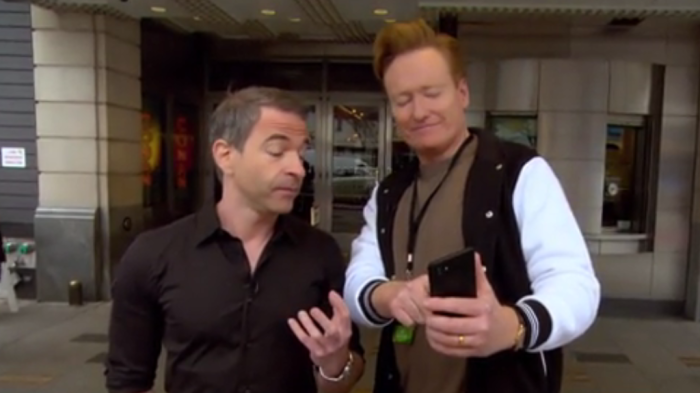
The partnership kicked off with an in-show brand integration during CONAN’s week of shows at the Apollo Theater in New York City. As Conan O’Brien rode to the theater with associate producer Jordan Schlansky, he was able to enjoy the commute with the accessibility of Google Play, or so he hoped. The video was shared and optimized across Team Coco’s social handles, generating over 1.7MM views to date on Facebook and YouTube.
“As Conan continues to evolve the boundaries of his late-night show and build an incredible community of fans in the digital and social space, we’ve been able to take a true omni-channel approach to our partnerships with marketers,” said Jenn Cohen, Senior Vice President of Entertainment Content Partnerships for Turner Ignite. “This social-led, year-long campaign brings Google Play unique access to the show across all touchpoints, while also rewarding the fans with more of what they want – their favorite late-night gamer.”
Next up in December, Team Coco’s accomplished gamer Aaron Bleyaert (better known as “Bley”) will dive into Google Play’s 2017 “Best of Play” list, revealing and reviewing the year’s top trending mobile games in a special edition of Stream Coco. On deck for 2018, Team Coco will attempt the show’s first-ever live mobile gaming marathon, where Bley will take on Google Play’s dynamic catalogue of games for 24-hours straight. Google Play will also road trip with CONAN for the show’s fourth annual appearance at San Diego Comic-Con.
CONAN airs Monday-Thursday at 11 p.m. (ET/PT) on TBS and is produced by Conaco LLC, with Jeff Ross serving as executive producer. Since premiering in November 2010, the show continues to be a hit with young adults, consistently delivering the youngest audience of any late-night series. The show also continues to be a phenomenal success in the digital and social media arena, chalking up more than 3.4 billion video views, in addition to 70+ million views for Team Coco’s branded content with clips from CONAN’s nightly episodes, international excursions and Comic-Con shows drawing more than 1.3 billion views.
On the social media front, O’Brien has 26.6 million followers on Twitter, making him one of the most-followed hosts in late night. Among the show’s other successes in digital arena, Team Coco and TBS earned an Emmy® for Outstanding Creative Achievement in Interactive Media.
About Turner Ad Sales
Turner Ad Sales monetizes the company’s portfolio of leading entertainment, kids, news and sports properties through award-winning advanced advertising capabilities that power return-on-investment for brands. Attracting a wide-scale audience of diverse fans, the collection includes leading media brands Adult Swim, Boomerang, Cartoon Network, CNN, Great Big Story, HLN, SuperDeluxe, TBS, TNT, truTV, Bleacher Report and Turner Sports’ high-profile coverage of the NBA, Major League Baseball, NCAA Division I Men’s Basketball Championship, ELEAGUE, UEFA and professional golf. In addition, the company has digital sales partnerships with the NBA, NCAA and PGA.
About Google Play
Google Play is an online store with millions of digital songs, movies, TV shows, apps, games, books and more. It’s a one stop digital entertainment destination where you have access to 40 million songs, thousands of new release movies and next day TV shows, millions of apps and games and thousands of news sources that can be viewed on any device – at home or on the go!
By Marti Romances, Creative Director and Co-Founder at Territory Studio, San Francisco
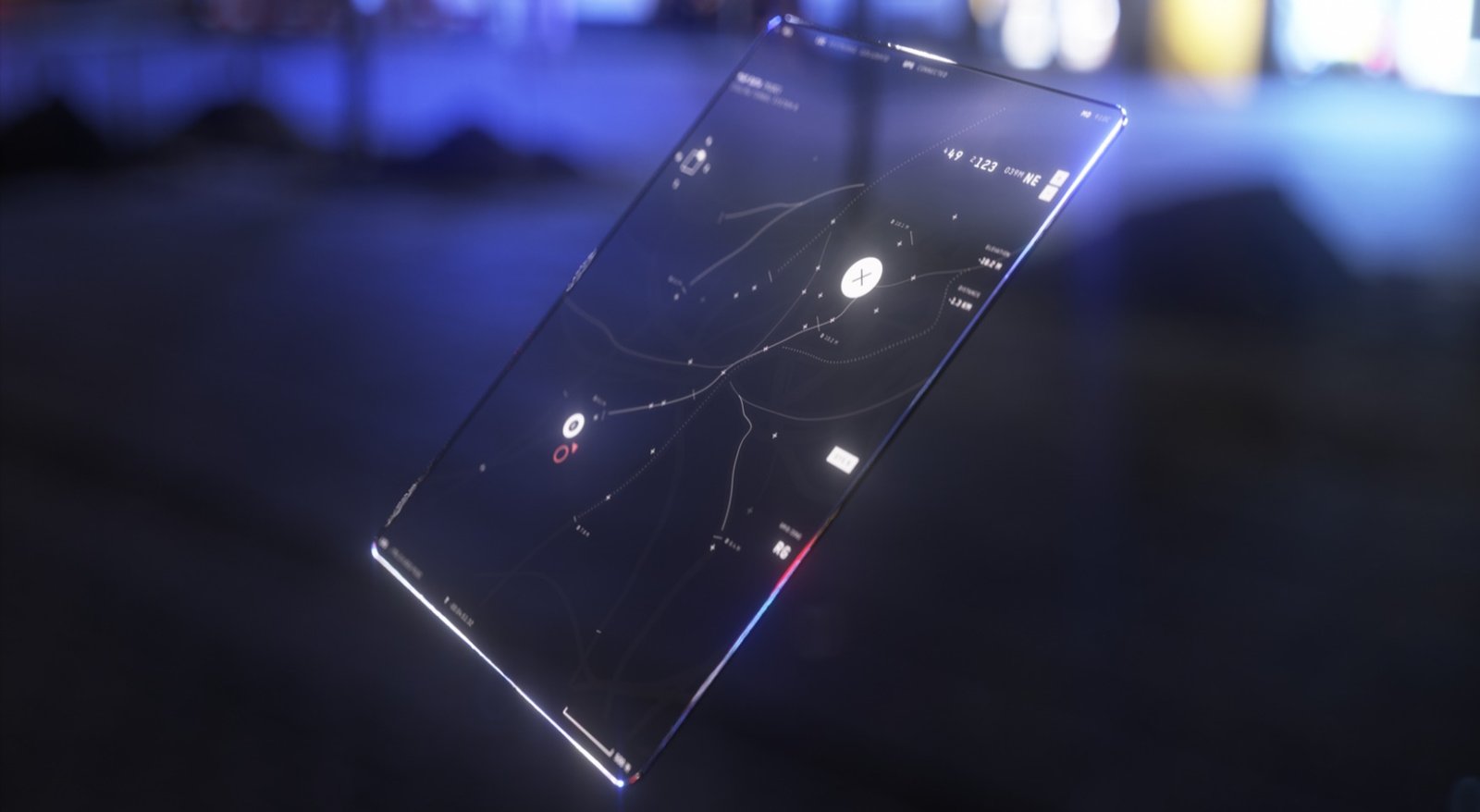
We embrace technology at Territory Studio and feel that design will typeface our future. While we are recognized for unique design capabilities on big-budget feature films, we also bring our design work into real-life products, projects, and experiences.
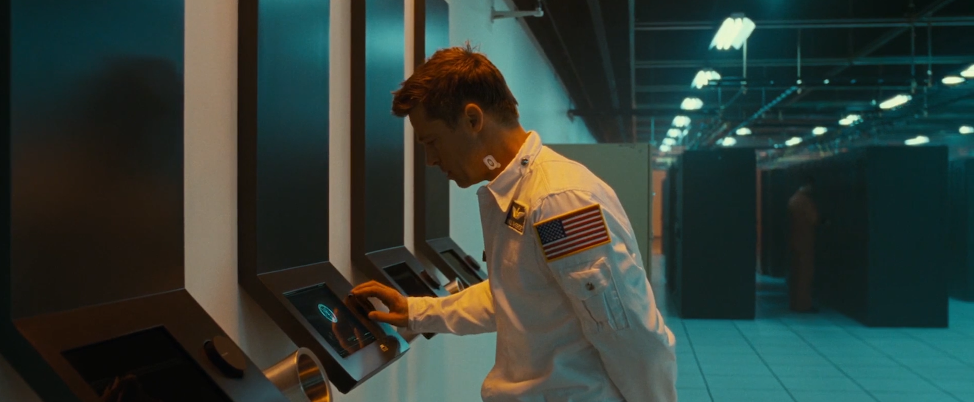
We do this not only because we already benefit from our world-building experience designing on culturally impactful films (including MCU’s Avenger franchise, Guardians of the Galaxy, Ex Machina, The Martian, and Ad Astra), but also because we believe that the future can be a better place for us all.
Our challenges have been astronomical for film, constantly charged with stepping into the future to explore alternate technologies that don’t even exist. Work on Ad Astra with director James Gray is a case in point, a project that saw us knee-deep in research with science and military consultants from JPL and NASA. But this experience allowed for its deeply informed design work, GFX constantly grounded in scientific and military references that give the film an authentic and believable vibe.
When we receive a screenplay we work diligently on interpretive breakdowns to identify where story beats can be told more effectively via motion graphics. Working on culturally impactful films in this way has been an amazing experience, but what we also love to do is designing new ways to interact with technology systems in real life. This is where our juices really get flowing…
More and more, films featuring future-facing technologies are increasingly shaping consumer expectations while simultaneously driving technological change. For this reason, I believe that design’s ability to leverage a brand’s appeal has never been so important.
Since my career began in design, technology has changed dramatically and transformed our lives for the better. Every day there is a new start-up or a new product in need of our services, looking for something fresh and original to help them communicate with audiences.
The wearable technology landscape is a burgeoning market worth over $50bn that has come to our attention, an industry that seeks forward-facing design work to attract and maintain buyers. This industry has continued to evolve and offer increasingly sophisticated options for wearers. And so it is important to enhance and improve interface designs to embrace these changes.
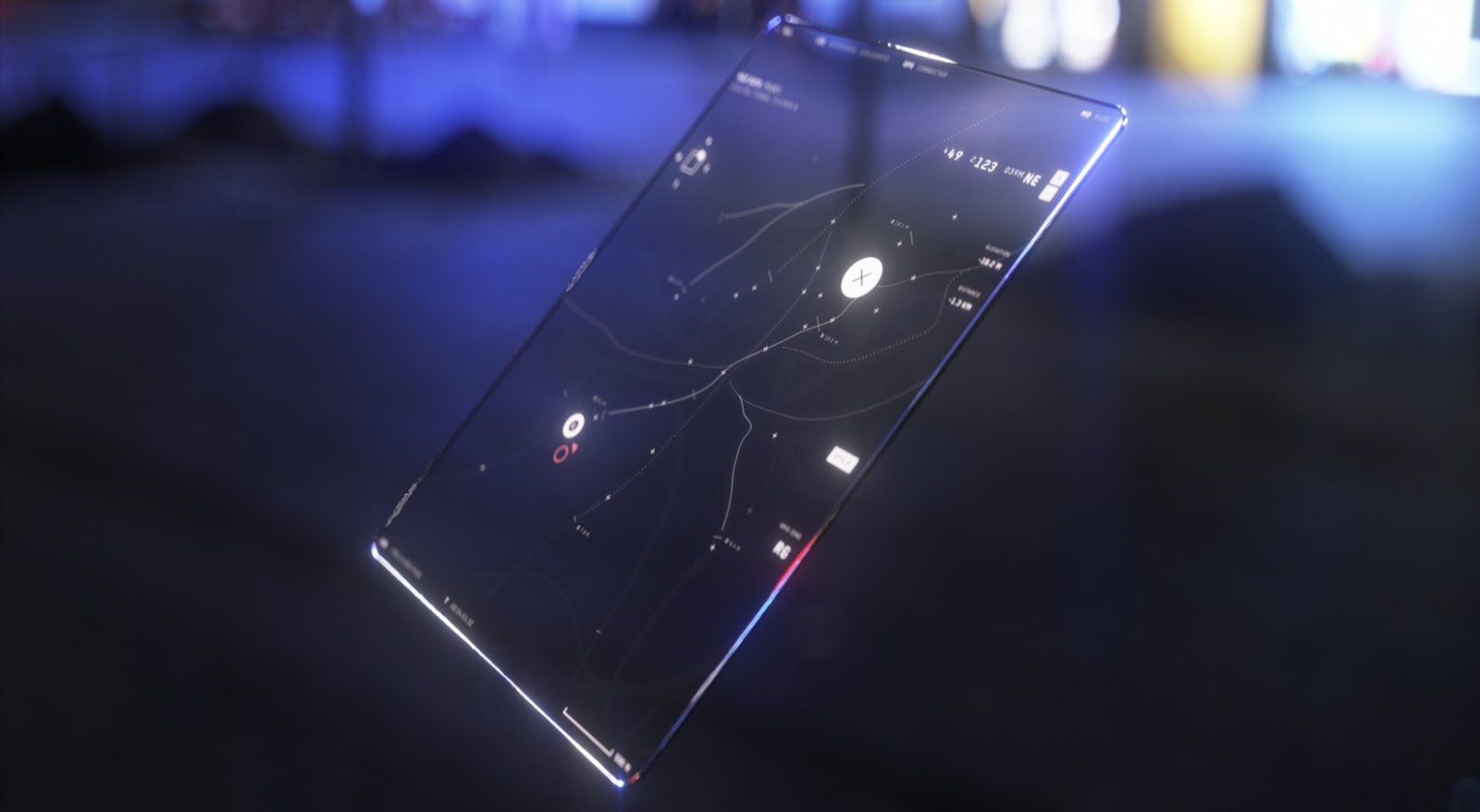
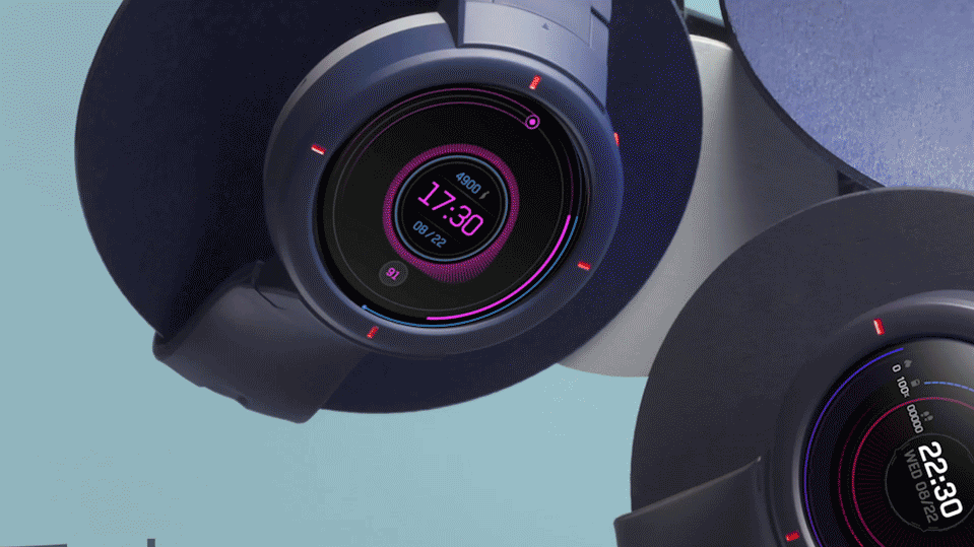
Huami recently requested similar UI designs as seen in our catalog of film work for use in its Amazfit Verge smartwatch. They wanted the surface of the watch to embody a fun, bold and futuristic aesthetic that would resonate with users that appreciate quality design. This brief gave us the freedom to bend and flex with ideas in new and exciting ways, ultimately pushing the visual language of the vivid AMOLED interface to create something fresh and unique, bringing the fantasy world of film into real-world technology.
The future in wearables offers exciting opportunities. We will see the emergence of smart textile technologies that will see brands offering us a multitude of clothing accessories. Fashion design in a high-tech culture will take on a new, bold approach as nanofibers and nano-coated clothing provides wearers with an insight into their body’s internal workings, giving us the opportunity to design on flexible and semi-transparent OLED displays. We will see garments detecting our posture and movement, mapping our bodies and signaling to us when we are slouching or bending, even changing color according to our emotions.
Meanwhile, Human Machine Interface (HMI) services for automakers continue to grow at our company, busy articulating design concepts that connect drivers with next-gen technology. It is another industry embracing change and in need of effective design work to connect new technologies to drivers.
Not so long ago everything in our cars was mechanical, even the clock on the dashboard was analog! Now the inside of most vehicles has become screen dominant. Our ability to use 3D real-time rendering tools has helped us immensely as we design, especially for auto clients such as Lincoln. Big processors are a thing of the past, and we can render photorealistic designs very quickly, a highly valuable resource to run different scenarios that show Lincoln what drivers will encounter on the road. They see firsthand how new technology works, and experience traveling at 20mph compared to, say, 80mph where reaction time is a huge factor.
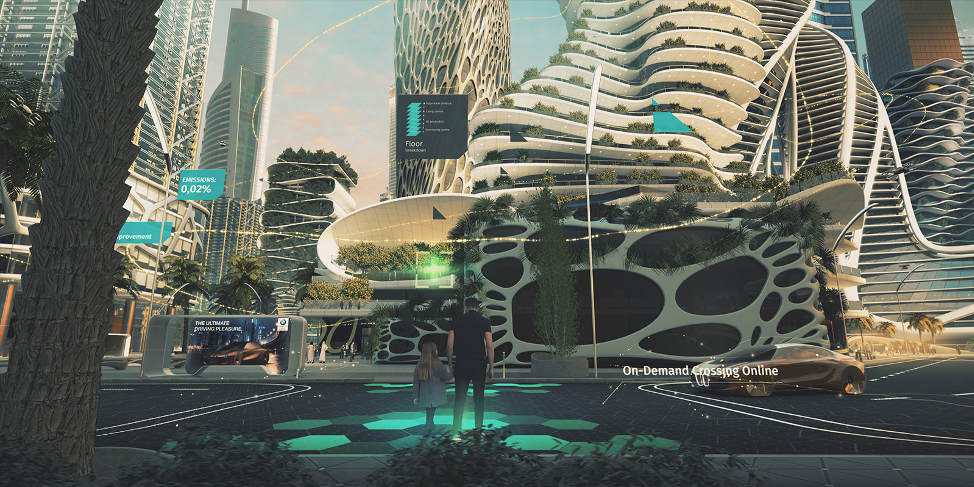
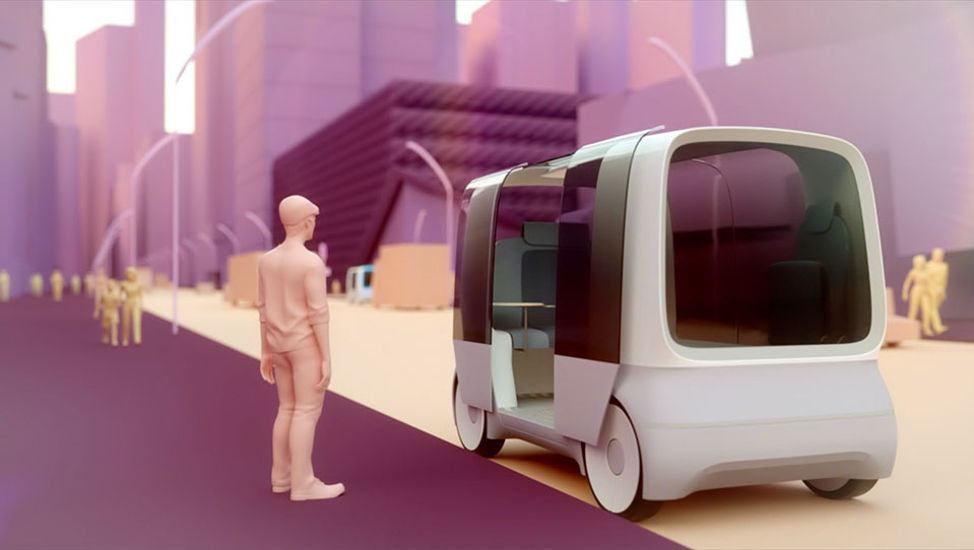
I also feel that there is a need for us to invest in solutions that lead to a safer and more sustainable future. Recent collaborative work with Fuseproject springs to mind, an Ives Béhar shop that develops cohesive brand and product experiences. It was a fascinating project that envisions faster and more efficient movement for people living in busy, bustling cities.
Tasked with designing a model of a near-future metropolis, the work demonstrates the potential of automated mobility in comfortable travel pods that predict a passenger’s needs – a fleet of personalized pods facilitating fluid movement within a city’s already entrenched transportation infrastructure.
These are the kind of exciting ideas that we see companies creating, and it is this kind of work that gives me faith in our future. Brands come knocking on our door because they are excited about our vision of the future, as well as our ability to anticipate their customer’s needs in a sometimes frantic and fast forward world.
About Marti Romances
Marti Romances is Creative Director and co-founder at Territory Studio in San Francisco. Born and educated in Barcelona, Marti draws from a range of influences, disciplines, and perspectives to design breakout content for gaming, film, brand and digital clients. A motion graphic designer and multi-media artist, Marti articulates stories in the most captivating ways, drawing on his expertise of blending creativity with technology to realize innovative future-facing experiences for a myriad of clients.
Marti’s technical virtuosity is on display in fantasy, futuristic, and commercial projects. His visual and experiential narratives define the future of film, UI graphics and motion design seen in The Martian, Avengers: Endgame, Ex Machina, Ready Player One, and Guardians of the Galaxy — compelling designs that have attracted forward-thinking brands such as Lincoln, Huami, Land Rover, and Volvo who seek similar design work featured in real-world technology.
Meanwhile, Marti’s continued willingness to experiment with bold ideas in new and exciting ways has garnered standout gaming clients such as EA Sports, 2K, Monolith Games, and Microsoft. Marti also serves as an inspirational speaker, sharing his thoughts and experiences on design and creativity at events such as Siggraph, Nike Immersion Labs, XDS and Adobe MAX.
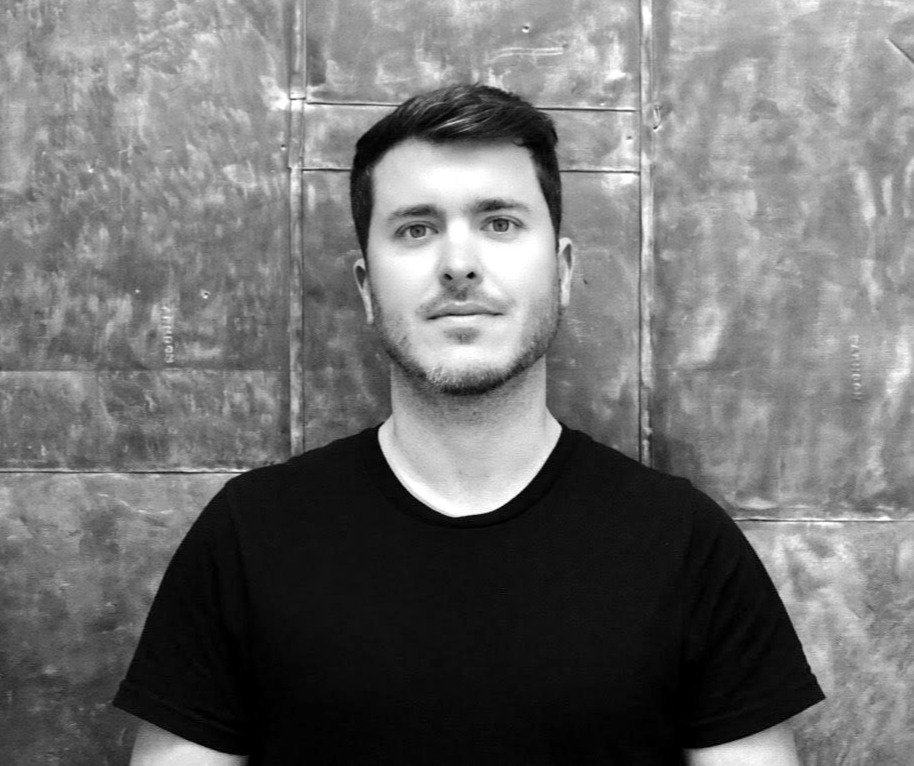
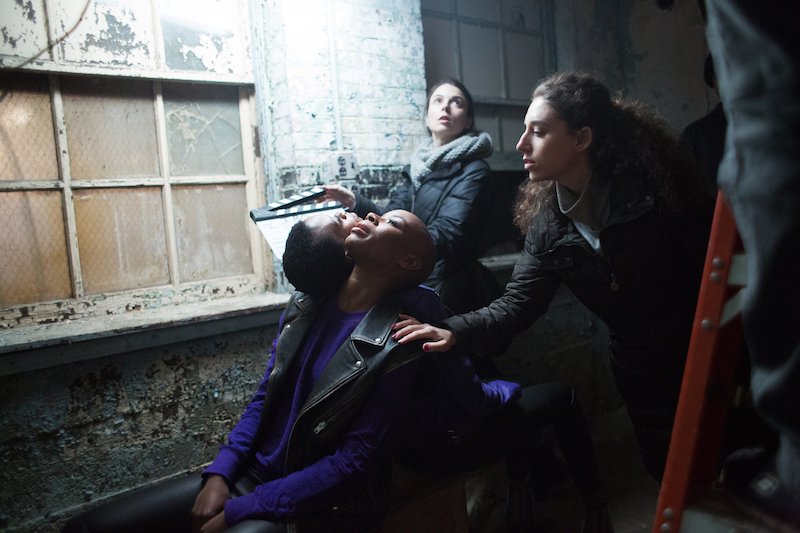
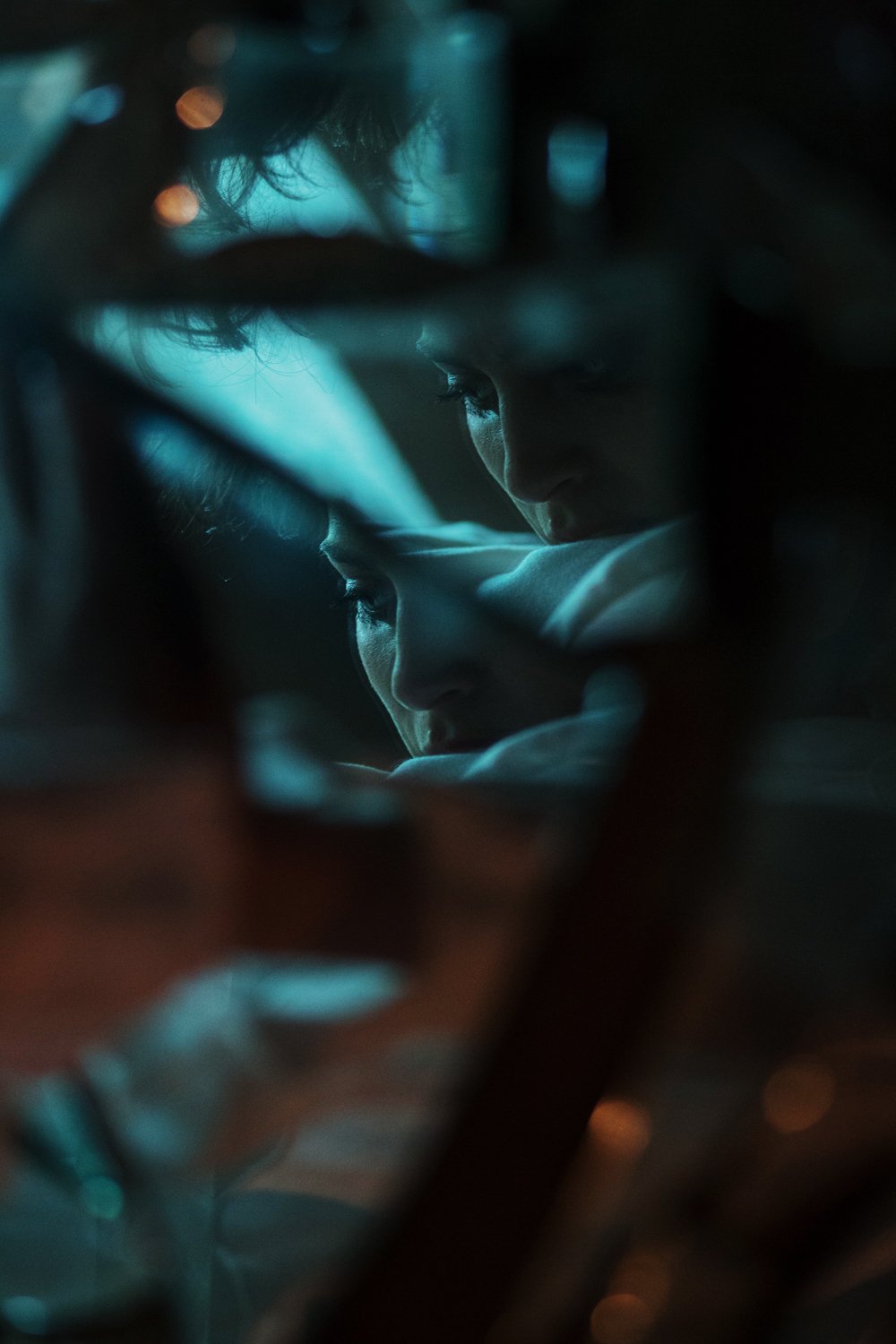
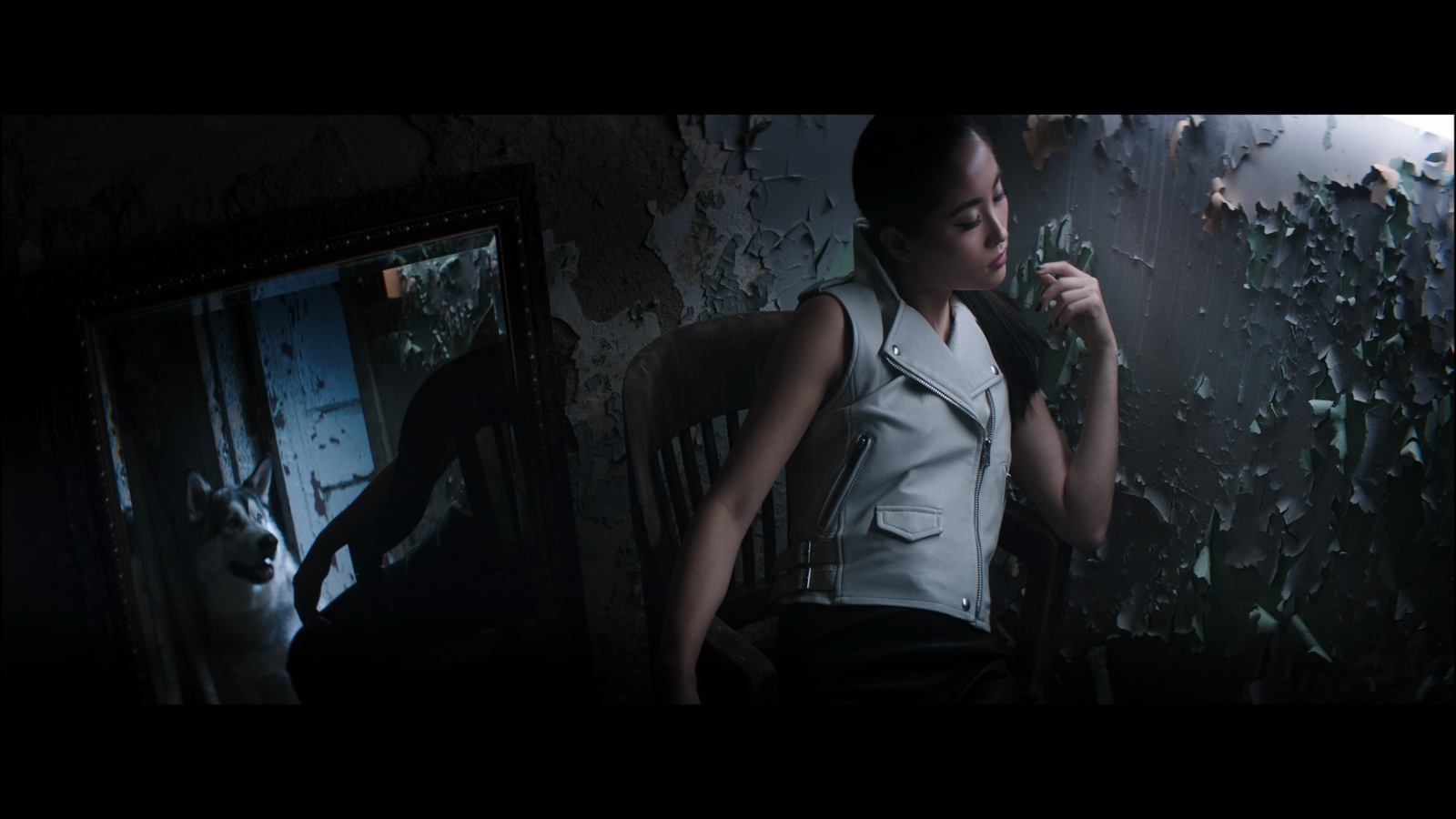
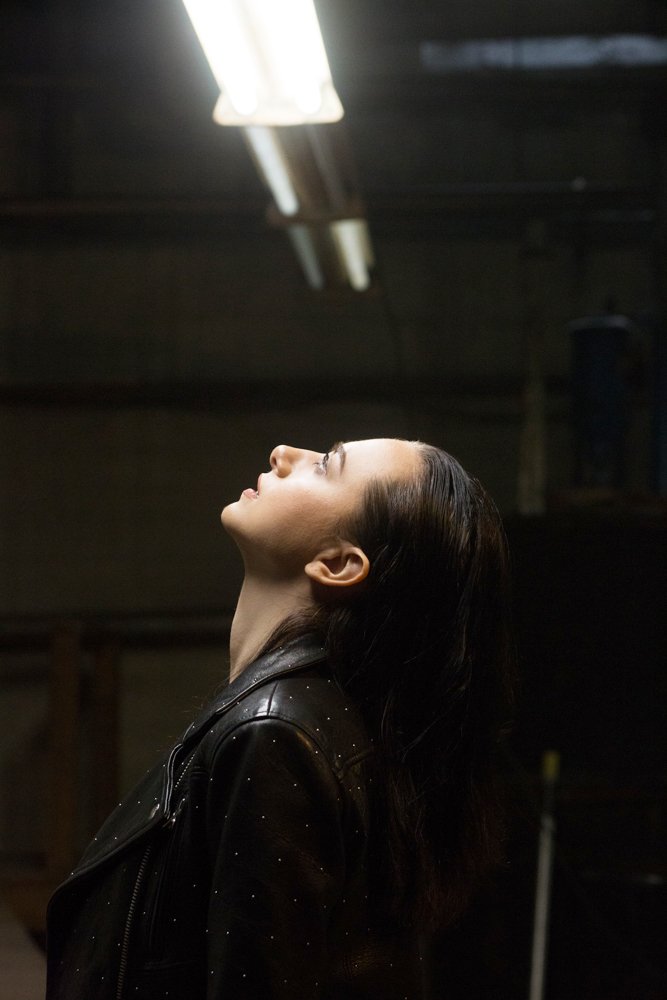
Stephanie Bollag is a woman with a vision. Bollag, a Swiss film student at the Tisch Graduate School, is a storyteller and fashion filmmaker whose work is both dark and tender, provocative and sensitive. In her last semester at NYU, after directing several narrative shorts, she discovered her niche: visually and viscerally evocative stories at the intersection of fashion and film told through the female gaze.
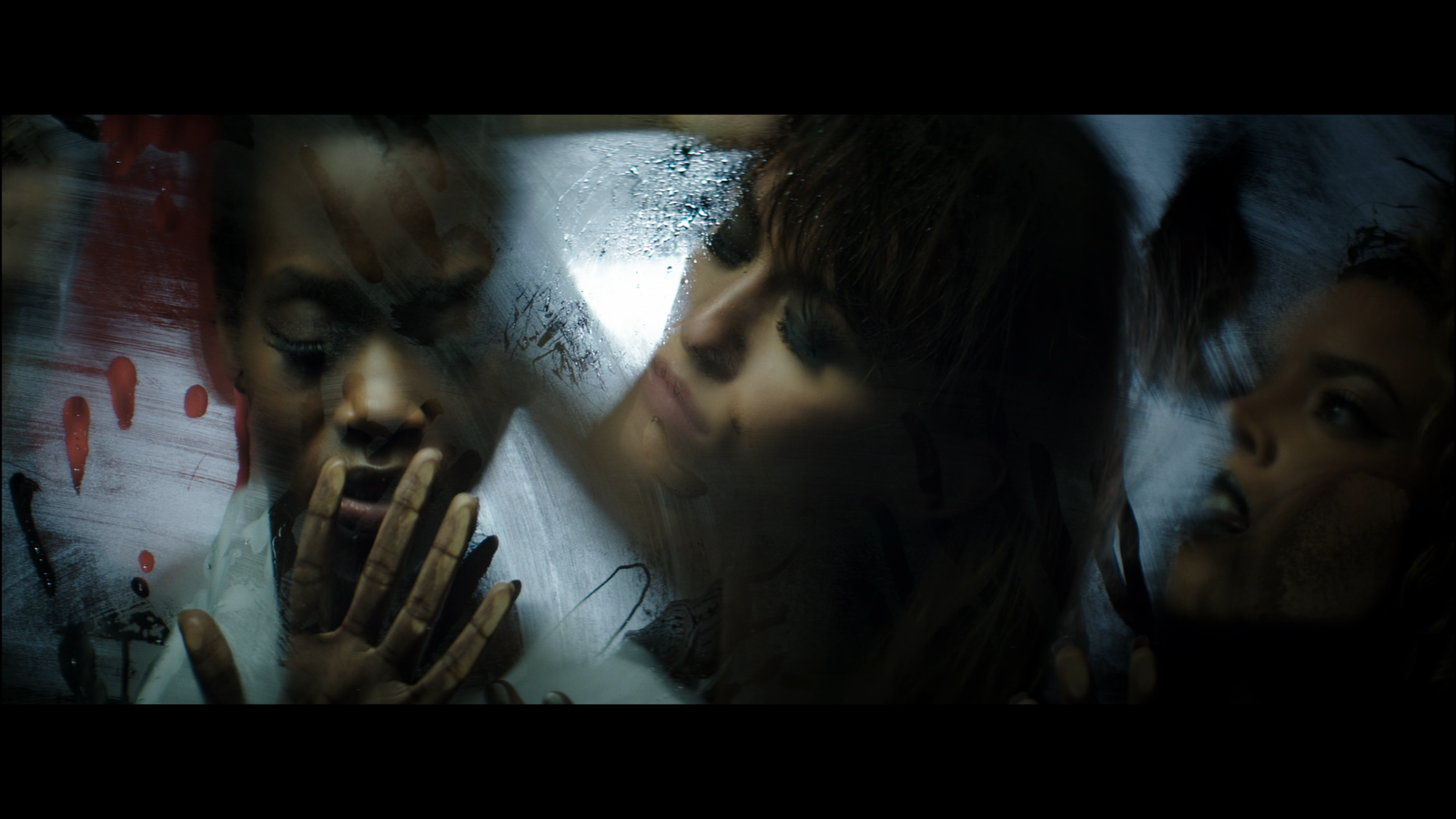
Her fashion film A Tale of Endurance: Celebration of the Imperfect, which she wrote, directed, produced and edited on spec for the French fashion brand IRO Paris is a celebration of color, race and women. It is meant to send an empowering and disruptive message about pre existing gender norms and racial stereotypes.
Brand Storytelling connected with Bollag to discuss her draw as a creative to making branded films, the value of having brands partner with creatives, and the importance of connecting with brands to tell authentic stories.
You call yourself a “fashion filmmaker.” What does that mean to you? How did that come to be your niche?
First and foremost, I am a filmmaker and storyteller. That said I feel at home with fashion. I grew up embedded in the business. My father was one of the people to make ESPRIT big in the 80s. The funny thing is that I always rejected the idea of following in his footsteps. Cinema is what fascinated me, and I could not envision a career in fashion.
Over the past two decades and especially during my graduate film studies at NYU Tisch, I refined and defined my aesthetic and sensibility. It also became evident that my ideas generally were too grand and too dreamy for the naturalist, indie filmmaking approach film school teaches. Which is how I discovered my niche; visually and viscerally evocative stories at the intersection of film and fashion told through the female gaze.
To me being a fashion filmmaker means that I can express stories and emotions visually without the expectation of a coherent storyline. Fashion films allow me to follow my gut and engage audiences through visuals. A strong, beautiful or disturbing photograph or painting can evoke all sorts of reactions. You can feel pain or pleasure by merely looking at an image. It is that visceral quality I strive to achieve in my work. As a classically trained painter turned filmmaker I found that fashion films allow me to do so.
How did you settle on this project? At what point did you connect with IRO to work on this project?
I wanted to create something edgy, dark and powerful. Early on the French fashion label IRO came to mind. A few years back I was introduced to the founders/designers of IRO, while doing the fashion buying for the IRO store in Zurich. I since followed the brand’s progress and kept in touch with the designers. I had just barely conceptualized the idea and pitch for the film, when I reached out with a questionnaire about the philosophy and mission of their label. The designers were familiar with my previous work and open to the idea of a fashion film for IRO.
“A Tale of Endurance: Celebration of the Imperfect” is a weighty title for a fashion film in which all of the communication is done with physicality and the face. Where did the concept come from? Where did the brand stand on this concept? Why offer to do something like this on spec? What do you seek to gain in creating work like this for yourself?
All my narrative films to date are centered on female characters trapped or confined by some inner or outer force, which they try to break free from. Life for them is “a tale of endurance” no matter the outcome. Enduring makes them stronger and more resilient. 18 months ago my father was diagnosed with terminal cancer. In situations of life and death everything becomes heightened and so did my artistic vision. I had all these emotions I could not put into words. This influenced my decision to make a film in which the images, sounds and music (not words) would carry the story.
Another source of inspiration for the concept was the interchangeability of IRO’s clothes between the sexes, which sparked the film’s central themes of androgyny and sexual identity. Fitting the models and actors at the IRO showroom in NYC, my stylist frequently assigned an article from the men’s collection to a female model/actor and vice versa.
Like most artists I felt an outsider growing up in Switzerland. Living in New York I feel at home. The norm does not interest me. A Tale of Endurance is thus also a tribute to the hodgepodge that is New York. Diversity yields emotional and visual texture. The models and actors I cast are of every color, ethnicity, gender, shape and size. The film’s superhero is a woman disrupting the status quo. As a result the film is multilayered and hopefully prompts discussions that extend past the surface.
I offered to make this film on spec for IRO for a few reasons. To me IRO’s clothes implied an untold story. Their unconventional use of hard and soft materials is reminiscent of my own visual language and sensibility. I imagined the IRO woman as a heroine in one of my films. But most of all, I saw a missed opportunity for a strong brand to market its product. Going into it I knew there was a risk of IRO rejecting the film, but I had nothing to lose. “Worst case” I would end up with a fashion film that embodies my aesthetic and vision and could be used to present myself to future fashion brands and collaborators. Whereas IRO liked my original concept and mood boards, and gave us access to their Pre- and SS17 collections, they finally found the film too risky and arty. Ultimately the film was not commercial enough for them.
As a storyteller, how do you feel about brands’ increased interest in moving toward artful storytelling rather than simply continuing to produce traditional interruptive advertisements?
It means my livelihood, so I fully support the trend. But jokes aside, I definitely agree that we are slowly moving away from advertising in the traditional sense towards more narrative marketing campaigns. In a world in which information is overflowing, showing off a brand’s USP (Unique Selling Proposition) does no longer suffice. Rather than a rational explanation of why their product is better, cooler, etc., brands need to appeal to audiences’ subjective experiences. The intangible is what determines the success of that tangible thing they are trying to sell. And what better way to market a product or service than by telling a compelling story that attaches meaning and emotion to it. Brands are only just starting to understand the value that storytelling and filmmaking bring to the table.
To me the creation of fashion films and branded content is not merely about making something artsy that is cool looking. Real storytelling means connecting the audience to the brand’s core value system. Today’s audiences can’t be emotionally coerced into brand loyalty. They are smart and demand a continuous relationship that needs to be groomed. Brands need to understand that the storytelling approach to advertising is a long game and a lasting effort to produce meaningful and appealing content that showcases the brand favorably while remaining emotionally connected and relevant to its target audience. This can only be achieved over time. One film isn’t enough. But if used correctly the tool of storytelling will continue to give.
What advice would you give to up-and-coming creatives looking to foster great working relationships with brands?
It is a fine balance between keeping up to date with what is happening in the ever-changing marketplace and fostering your aesthetic and stories on your own terms. It is a constant juggle between listening to others and following your gut. Having a strong portfolio, website and/or a film that represents your sense of story and style to a potential client is key. I would advise any aspiring creative to experiment a bunch before putting their professional reputation on the line. The rules of ‘fake it till you make it’ don’t quite apply to filmmaking. There is a lot of knowledge, life experience and technical skills involved in the creation of a film. I am not saying film school is a must, but it definitely gave me the liberty to experiment and ultimately find my niche. Nothing beats having a deep understanding of the craft and developing your own voice through trial and error. Of course that requires resilience and patience. In terms of pitching to clients, I would always advise to meet with them face to face. So much of what I do is based on personal interaction and chemistry. Treat them as your collaborators.
Between 70,000 and 30,000 years ago Homo sapiens started telling stories.
In his bestselling book Sapiens author Yuval Harari says around 70,000 years ago, an inexplicable genetic mutation in the brains of Homo sapiens enabled our species to begin to think in a new way, communicating about things beyond basic survival. Harari says it was this “storytelling mutation” that separated us from the apes, and propelled humans to the top of the food chain.
What began as gossip and chit-chat – who was sleeping with who; who hates who; etc. – eventually gave way to complex narratives imagined by humans, that would serve as the foundation for human civilizations. The assertion is that the existence of shared ideas – religions, nations, financial systems, and corporations – is a direct byproduct of humans’ ability for “collective imagination.”
So, through that lens, is storytelling the vehicle for helping humans understand and rally around the common ideas that link us one to another? Or is it the story itself that connects us to each other? Because, what else is there really?
How Stories Catch On – Breaking it down:
IMAGINATION:
a human dreams-up an idea/story and puts it out there;
ATTENTION:
the story gets the attention of other humans;
EMOTION:
the story resonates with other humans on an emotional level.
The term “brand” originally meant “an identifying mark burned on livestock with a branding iron.” The concept is, essentially, marking what is yours with a recognizable symbol. In advertising, branding is done with words, symbols, design, and tone/voice. It’s an expression of your organization’s function, purpose, and aesthetic, defining what your company or product represents.
But whether you’re branding livestock or branding your new product line… in order for your idea to catch on and have impact, it isn’t enough just to have a story. Stories need to stand out and connect with their intended audience. Because no matter how creative your message is, you wouldn’t want to brand it on the underside of your cow’s belly. No one would notice the message there; and no one would be emotionally compelled to stay away from your cow.
In today’s cluttered twenty-first century media environment, to truly engage an audience, story-”telling” alone – expecting an audience to passively read, watch, or listen to a story– is often not enough. With billions of pieces of content uploaded daily and continuous feeds on social media platforms, to cut through the noise and make its mark, a brand must elevate its story-“telling,” inviting its audience to participate in interactive story-“doing”:
For instance: brand-hosted social media conversations where consumers can tell their own stories, allow for an authentic experience and a sense of ownership. Quizzes and games provide an opportunity for consumers to contribute insights.
Interactive video with shoppable links can lead to increased time spent on site, as well as a more direct path to ecommerce.
And today’s smartest publishers and brands are pushing themselves even beyond story-“doing” to what some are calling story-“living”: sophisticated high-tech consumer-centric engagement, leveraging technology to create emotionally compelling brand stories where the audience is fully immersed: AR and VR, advanced voice technology, artificial intelligence, and the like.
Alex Smith, Creative Director at SMITH Creative Labs, a digital design and innovation studio, says brand storytellers shouldn’t view technology as a marketing tactic. “As the media landscape has gotten fragmented over the last decade, and new platforms have emerged, tech has become the medium itself – a channel for a brand to talk to consumers—whether that’s a chatbot, an AR experience, or an interactive microsite like the one we just built with the Washington Post Brand Studio and Siemens. Marketers need to stop thinking about tech as something exotic, it’s an essential element in reaching an audience now.”
Chatbots, AR, and interactive video — 70,000 years in the making.
What’s next for Homo sapiens and storytelling?
What role does technology play in your brand storytelling? Are you leveraging tech resources to put your audience at the center of your story? Are you advancing your narrative beyond communication, to action? danielle@dashbrandedcontent.com
About Danielle Dardashti:
Danielle Dardashti – founder of branded content advisory firm dash. – is an Emmy award-winner, author, media executive, and former TV reporter. Danielle has been collaborating with marketers on branded content strategy for over a decade, and has held senior leadership roles at Meredith Corporation, Tribune Publishing, IKA Collective, and Magnet Media. She is on the board of directors of New York Women in Communications (www.nywici.org) and was honored in March 2018 by the Native Advertising Institute in Copenhagen, Denmark, as one of “100 Significant Women in Native Advertising.”
Think of the times you may have asked someone that very question. Maybe of a son or daughter as you looked over their report card, or of an alluring stranger sitting at a bar. How many times a day do you look at someone in public and wonder, “What is their story?”
Really, each of us are a unique brand. That notion is not exclusive to the Trumps, Clintons, Kardashians or Lebron James of the world. We are all brands, and the stories we tell define our values and character. Today, as interruptive advertising is increasingly annoying to consumers, brands are coming to realize how critical it is to tell stories that reflect their values, make people like them, and ultimately, trust them well enough to buy their products and services.
In this episode, we talk with marketers from Dick’s Sporting Goods, Marriott International, and Mondelez. Each are producing a variety of stories, published on various platforms; from Snaps and Vines to long form documentaries, comedy, fantasy and scripted series. Stories of all shapes and sizes, that are engaging audiences and endearing them to their brands. These brands have taken a bold step towards investing in content that consumers will find valuable and sharable. And, speaking of sharable, we hope you will!
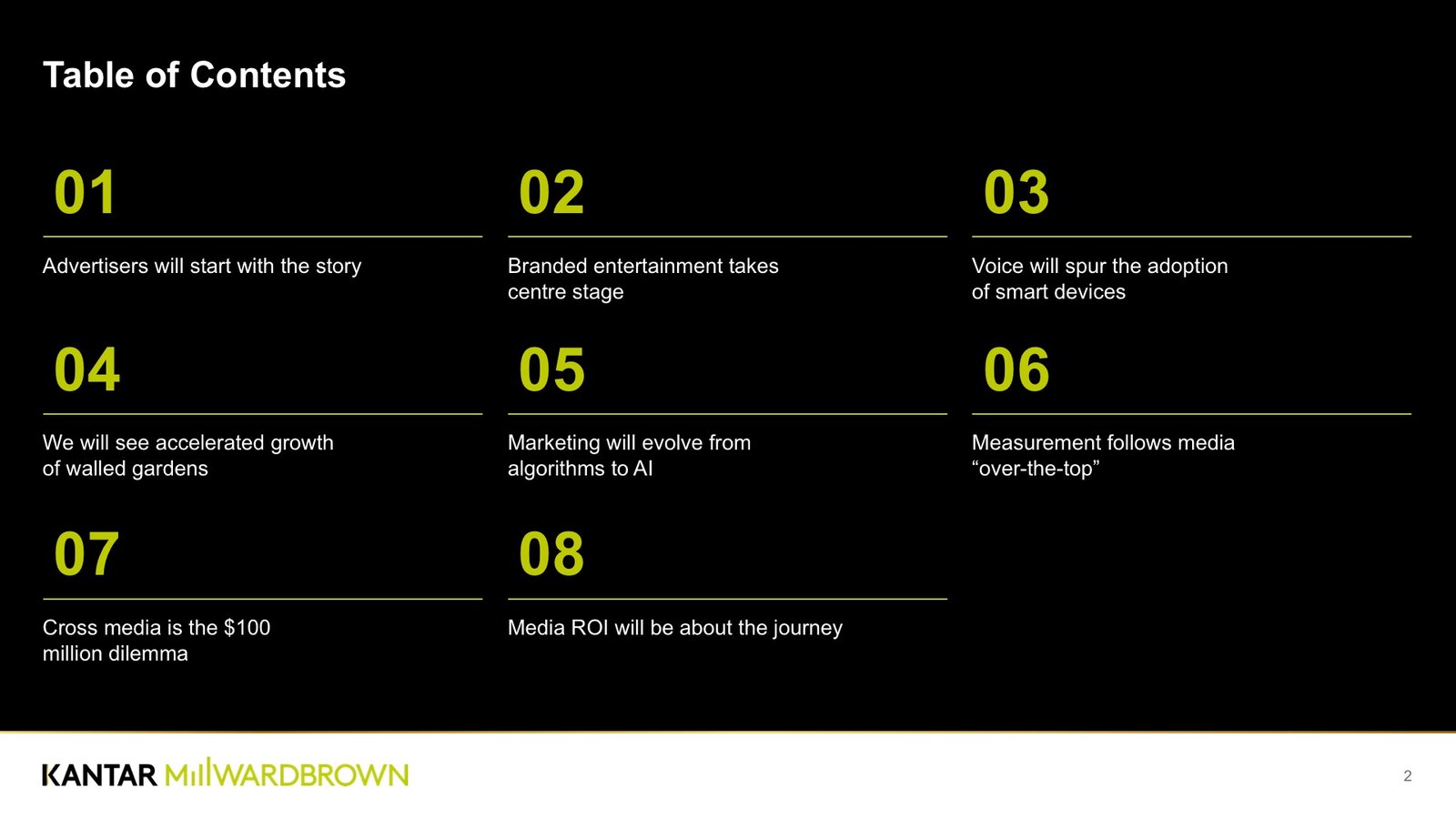
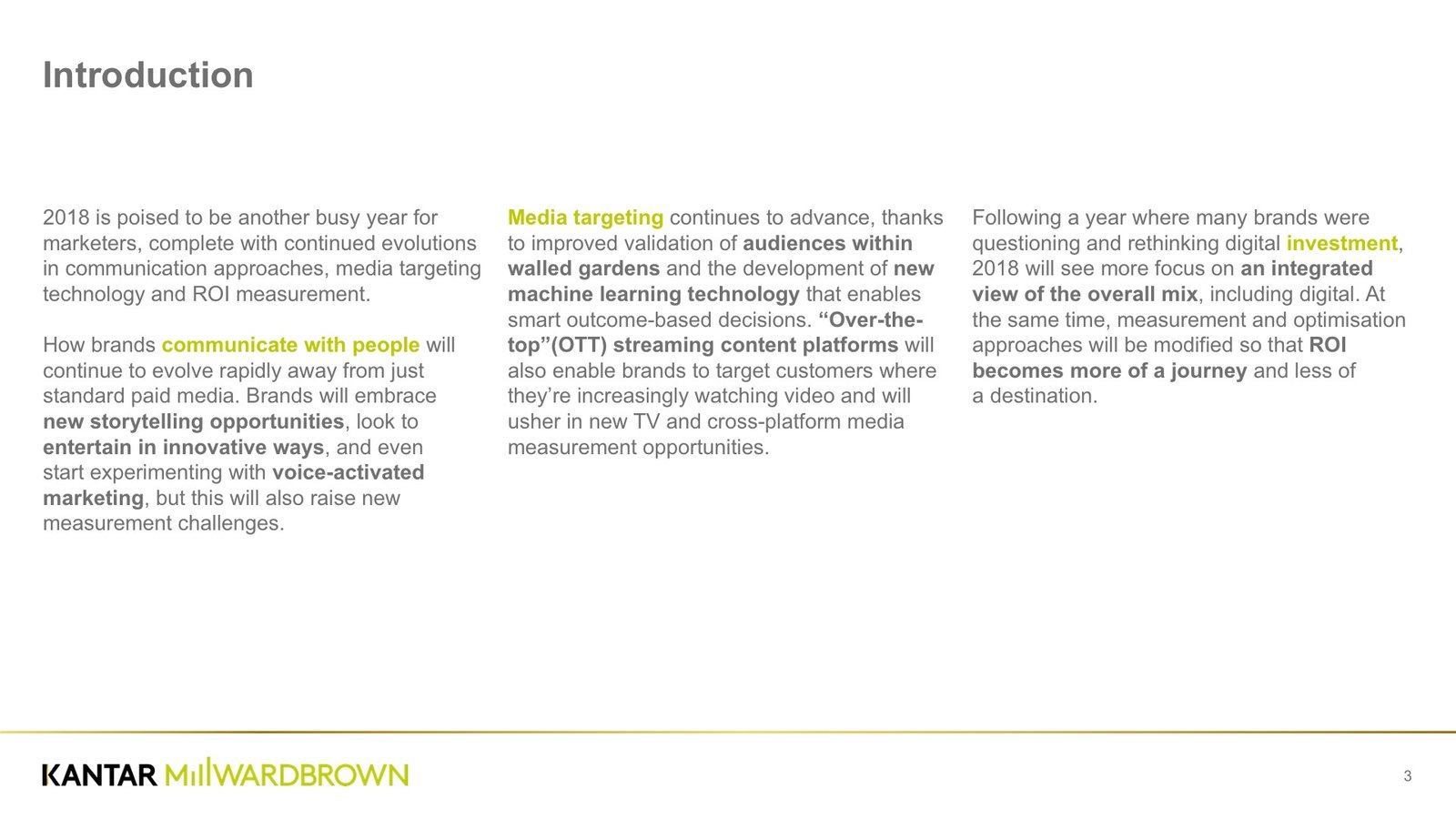
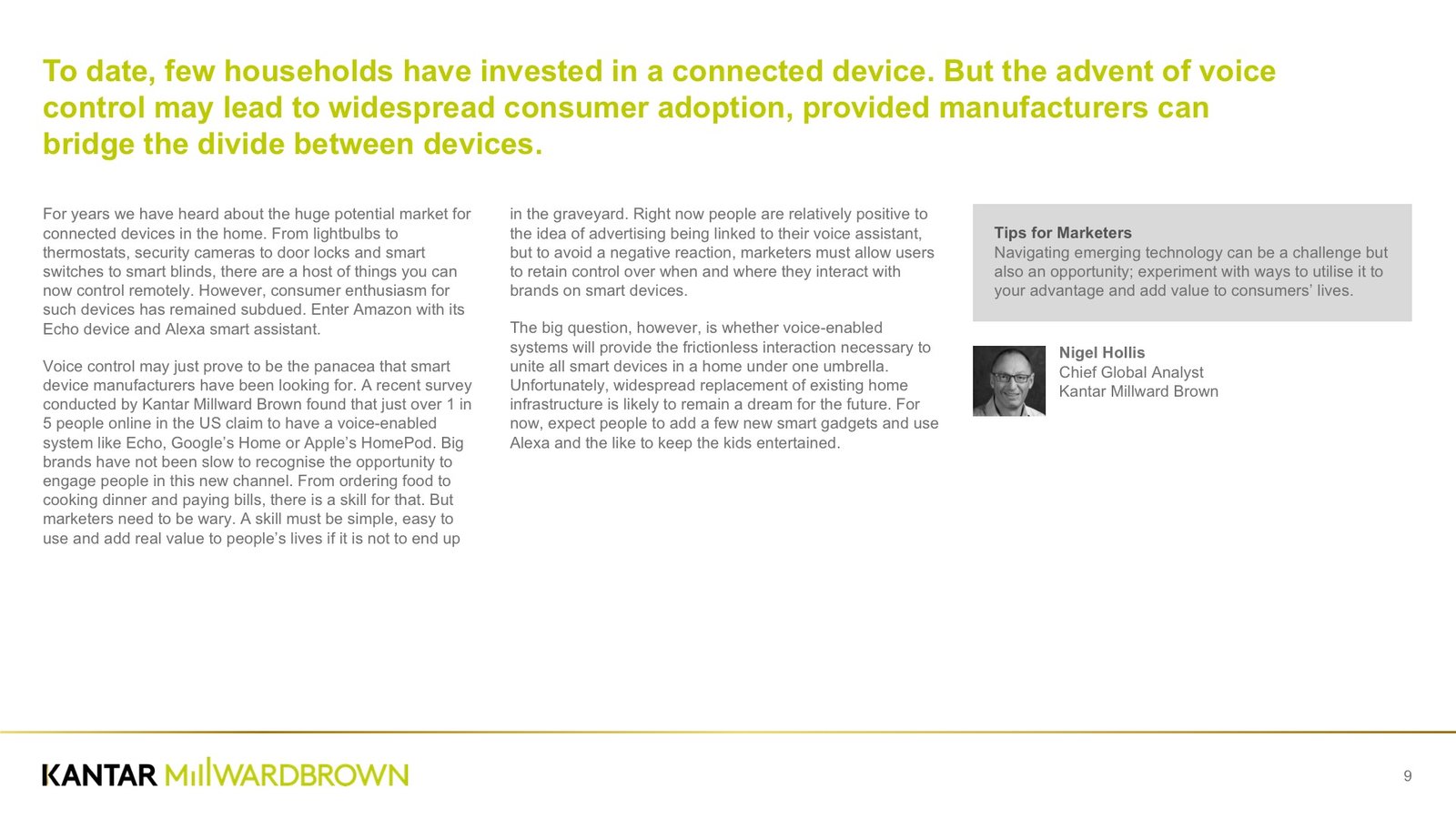
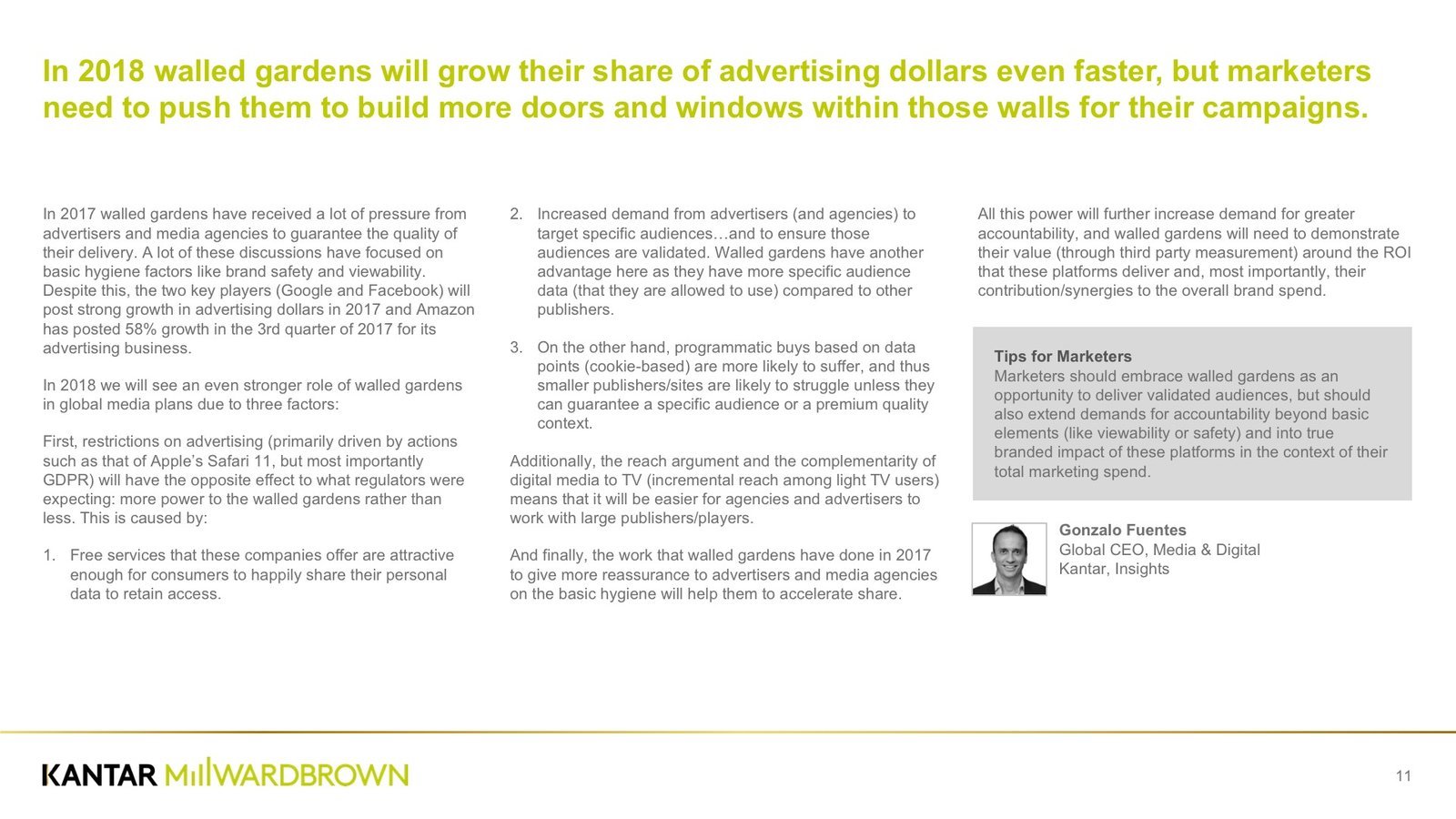
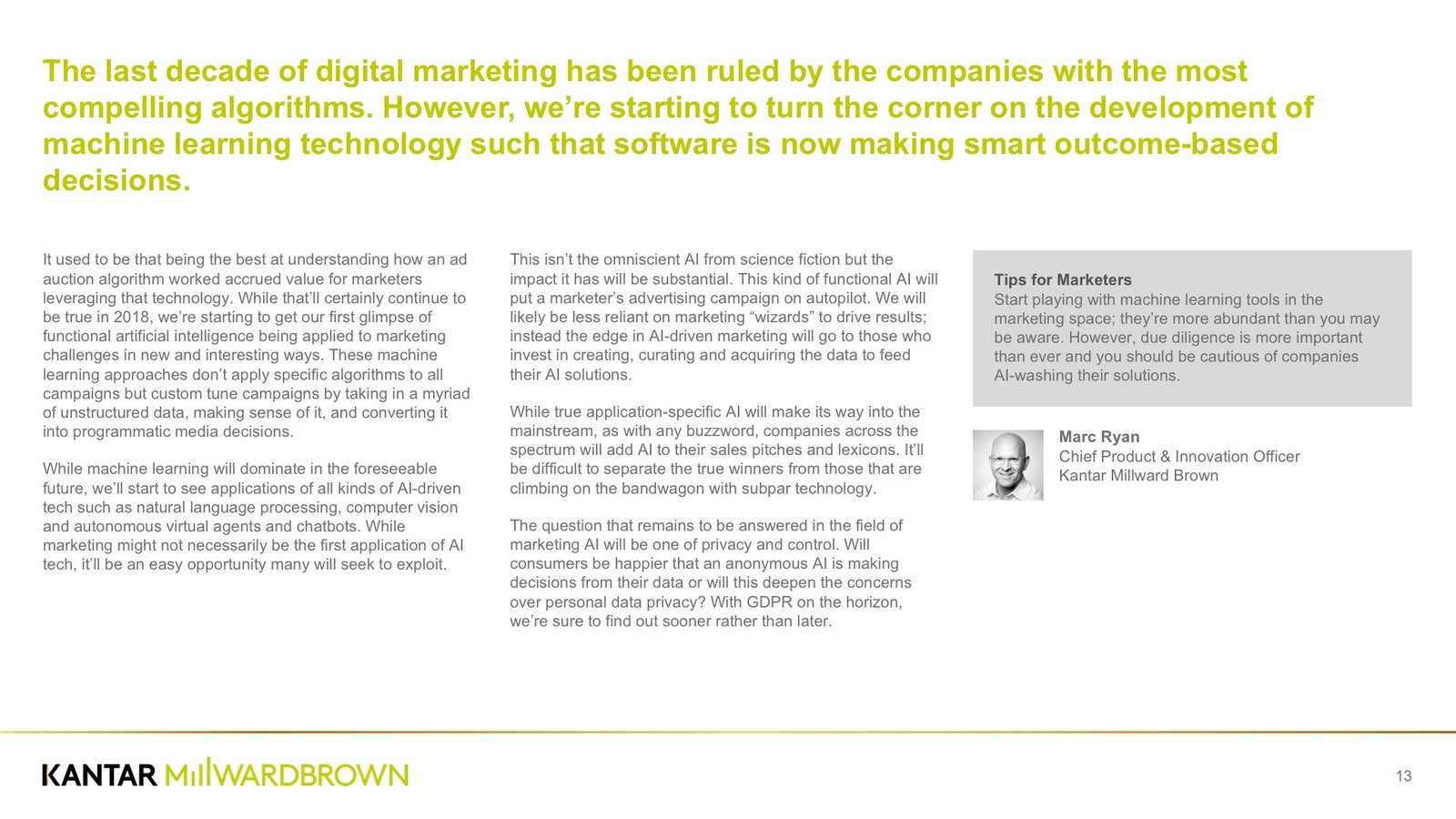
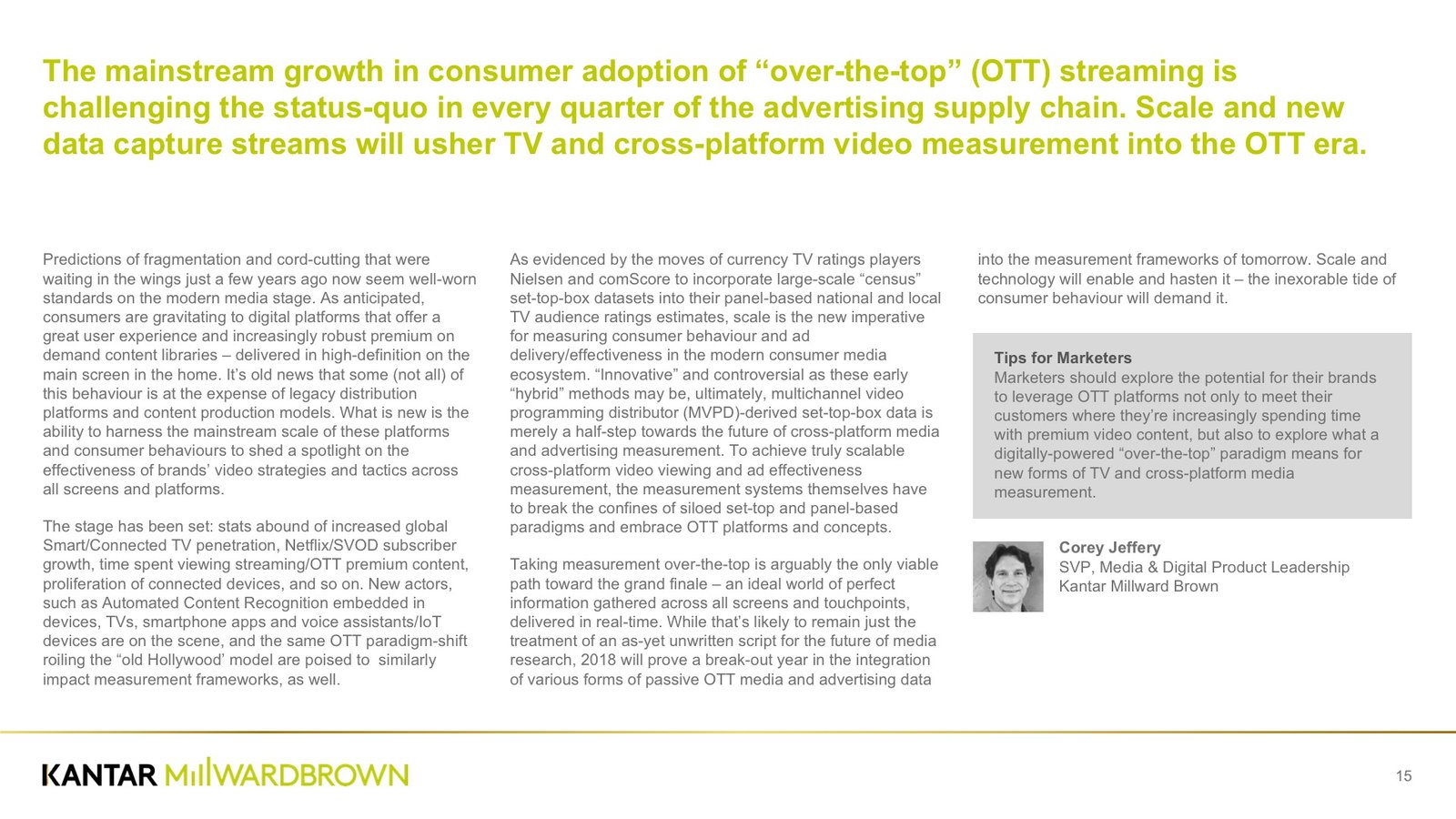
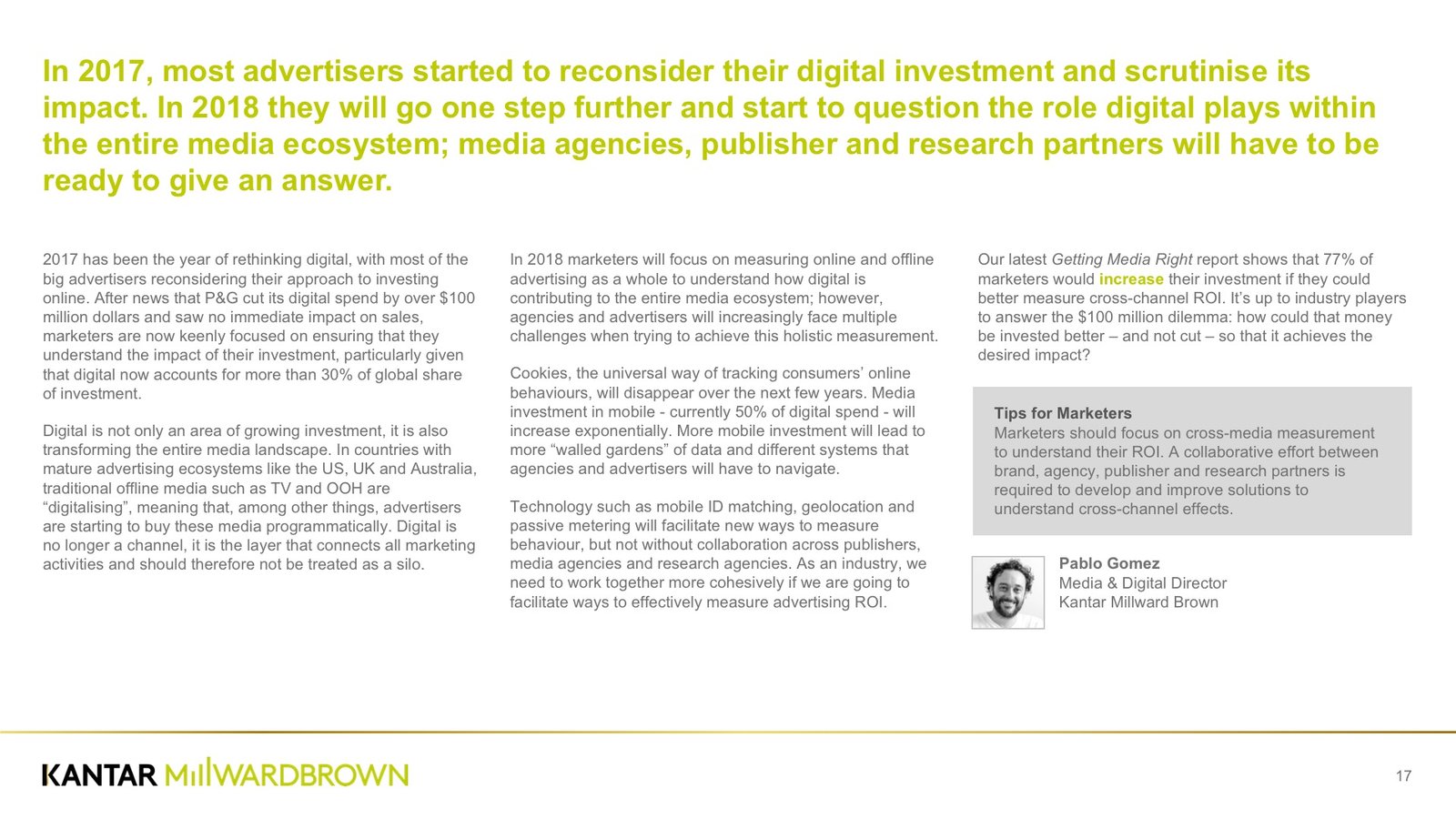
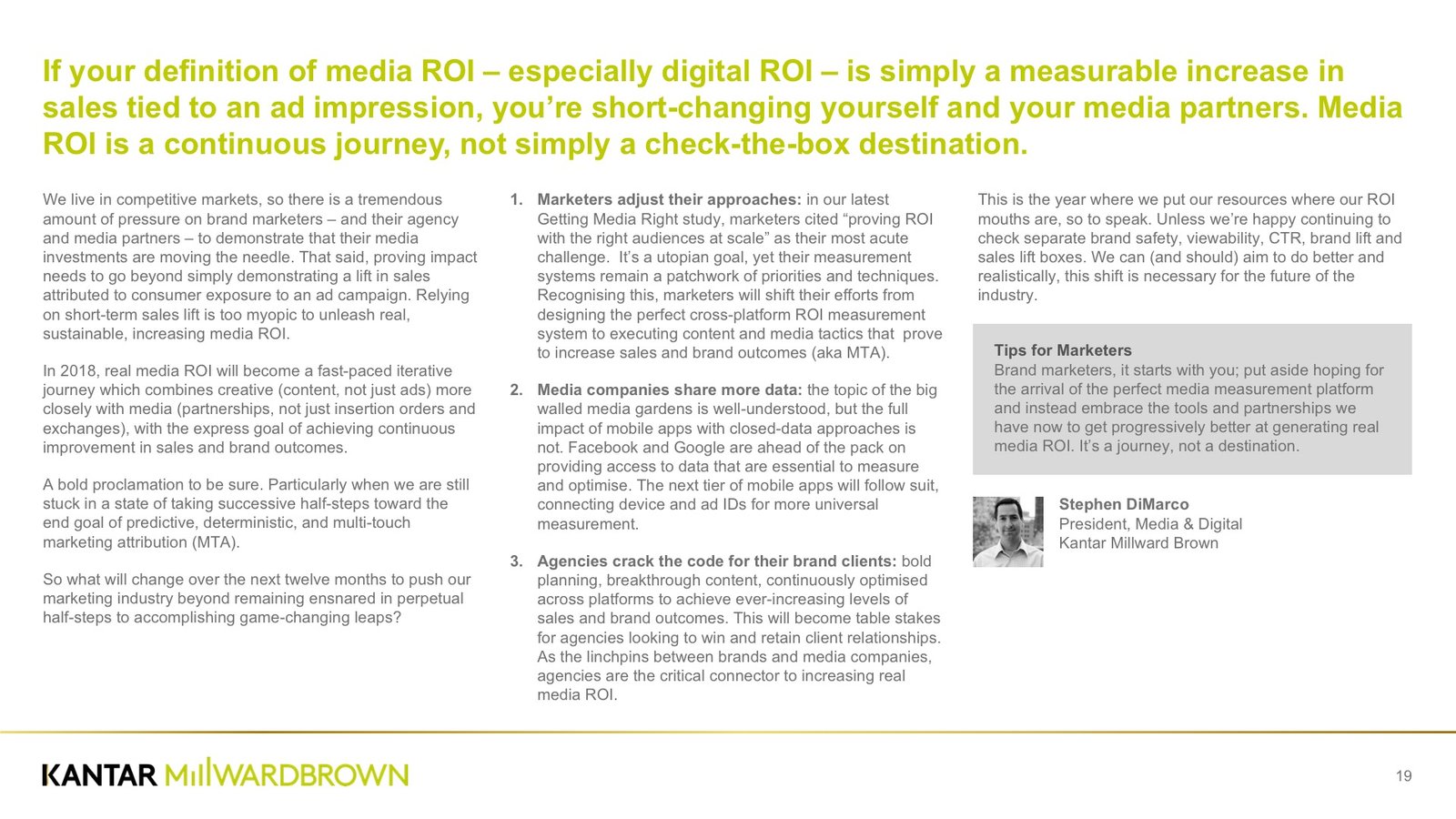
Kantar Millward Brown, global industry leaders in defining brand purpose, developing winning advertising, engaging consumers, and driving brand growth, recently published their 2018 media and digital predictions report. In it they forecast everything from a shift from marketing algorithms to AI to increased consumer investment in voice-controlled connected devices. But of the eight large predictions the report makes, it’s Kantar’s first two that we find most intriguing.
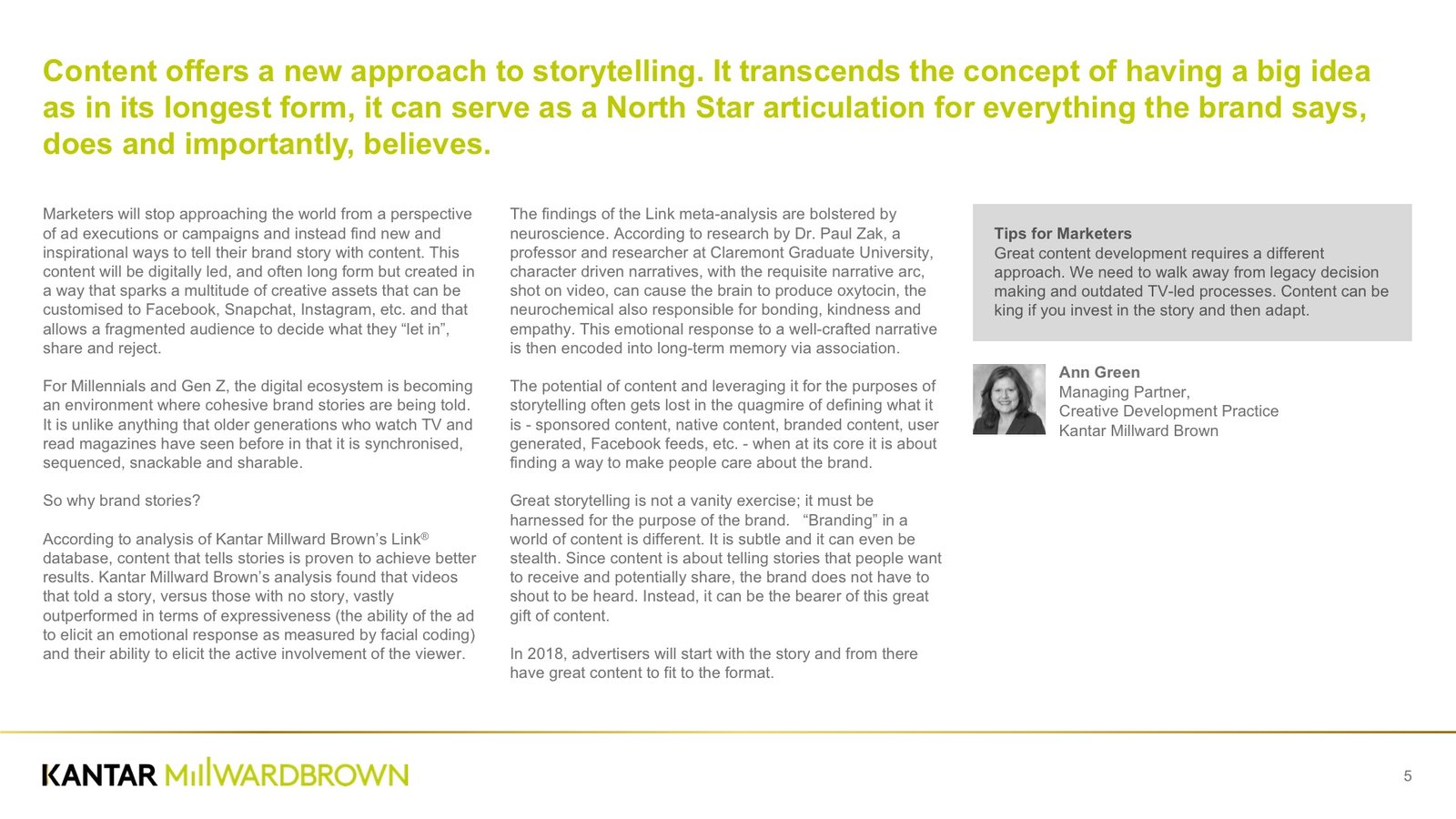
One: Content offers a new approach to storytelling. According to analysis of Kantar Millward Brown’s Link® database, content that tells stories is proven to achieve better results. The prediction is that next year, advertisers will start with the story and from there create great content to fit to the format.
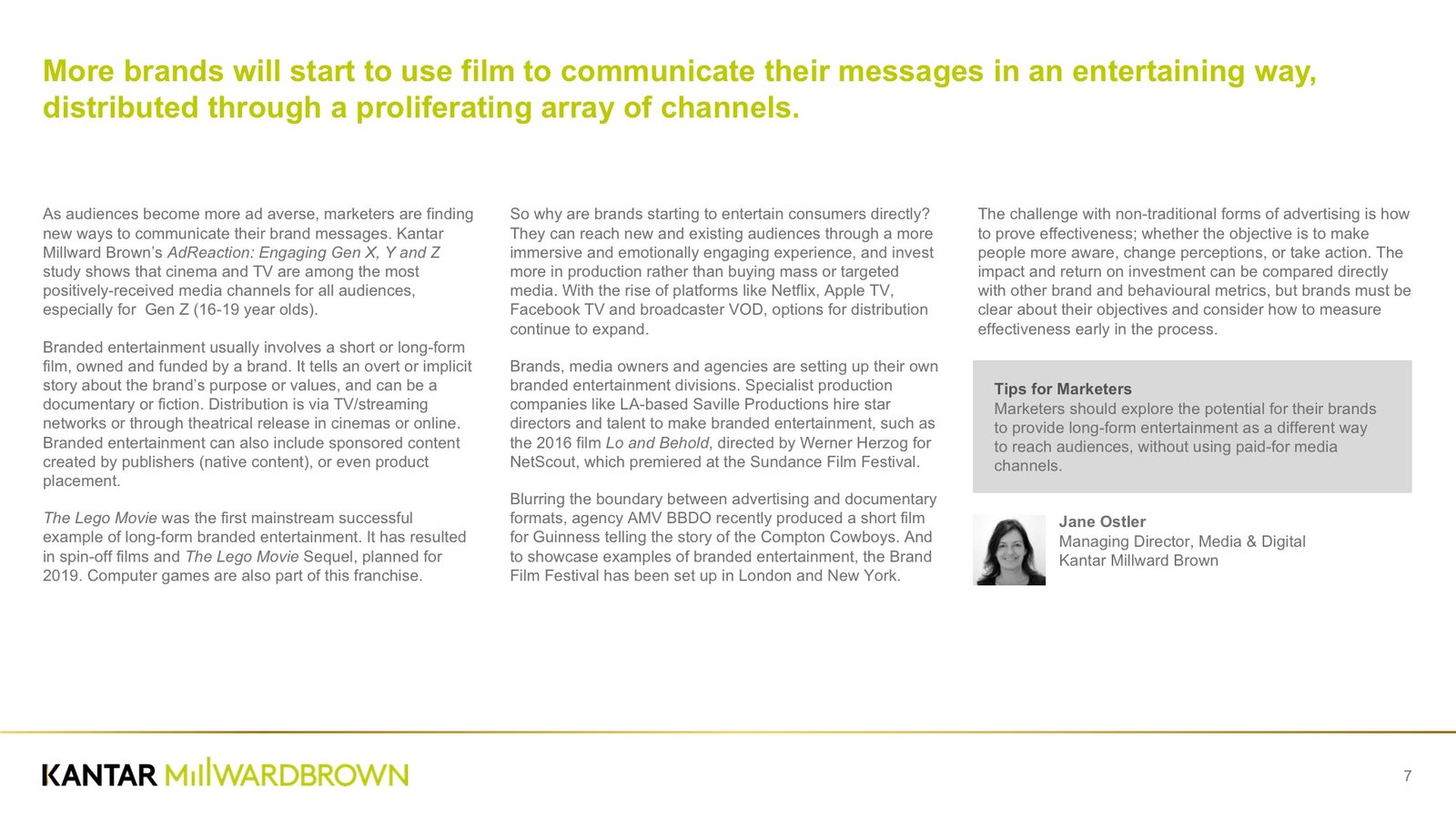
Two: More brands will start to use film to communicate their messages. In this way, brands can reach new and existing audiences through a more immersive and emotionally engaging experience. The report even gives mention to friend of Brand Storytelling Saville Productions, whose 2016 film Lo and Behold (directed by Werner Herzog for NetScout) premiered at last year’s Sundance Film Festival.
The Kantar Millward Brown Media and Digital Predictions report is full of relevant insights and interesting predictions for the new year. For more details on their marketing, storytelling, and ROI predictions click through the full report below (click slides to enlarge).
—
Watch for weekly news updates from Brand Storytelling in your inbox, and share this with other storytellers in your network.
Of course, if you’d like to contribute to the story, We’d love to hear from you. Email us!
The value exchange between consumers and advertisers is no longer a fair trade. Audiences can find their content without having to watch a single ad if they so wish, and advertisers are re-tooling their strategies and teams to make a bigger splash in deep end of the content pool.
Branded Integration has, and always will be, one of the most effective ways to get around interruptive advertising. You can showcase products and/or services, up-the-ante on brand recognition, or even show a little personality. However, there is little room for KPI’s, brand messaging, and monetization. It’s not like General Motors can put a link at the bottom of “House of Cards” and measure CTRs. But, when it comes to fragmentation, it’s not just the creators and consumers that benefit from content-anywhere-anytime. Brands have a new platform to jump from in their efforts to make that splash. Brands— or, should I say; “content studios” now have the opportunity to match the film industry on how much original content is readily available. We see it from PepsiCo, Red Bull, JW Marriott, DICK’s Sporting Goods, and many more. If you can’t find the right content to integrate your brand into, create your own.
BEN (Branded Entertainment Network), is leading the charge in seamlessly integrating brands into quality content across film, television, OTT, and digital influencers. I had the pleasure of attending their Integration Summit back in November of 2016, where I sat down with members of their team, as well as a few speakers on their panel including Chris Moore (Good Will Hunting, American Pie, Manchester By The Sea), Michael Sugar (Spotlight, The Knick, The OA), and Furious Pete.
This January, eighty brand marketing executives, and their agency partners were invited to Park City, Utah to participate in a first-ever Brand Storytelling event held in association with the 2016 Sundance Film Festival. These invited guests were chosen because they are the people pioneering a new era in advertising, media, and marketing. These are the individuals leading efforts in shifting investments away from interruptive messaging, and towards content that delivers value. They are leading efforts to create content that informs, enlightens, entertains, thrills, and endears consumers with their brands.
Our job was to host this group in Park City for the first weekend of the 2016 Sundance Film Festival, and create a forum where marketers could meet with peers, filmmakers, creators, influencers, and media partners. It was a highly charged crowd of brand storytellers and their cast and crew that gathered for four days. We took the opportunity to talk to a couple dozen of them, capturing over 13 hours of interview content.
Now, we are near releasing a five-part docu-series that captures the perspective and insights of this highly-charged group, all captured during the 2016 Sundance Film Festival.
—
Can Brands Create Content that Makes Money?
That seems to be the concept that a few brands are pursuing. As CFOs and procurement teams are looking for more ways to cut costs to increase profitability, along comes a new idea; “let’s build content creation competency that can produce branded content while at the same time creating content we can actually monetize.”
Just read what Pepsi is doing with Creators League:
“Our goal is to really behave like a Hollywood studio,” said Mr. Jakeman, president of PepsiCo’s global beverage group. That sounds familiar. I think we heard David Beebe, VP Global Creative + Content Marketing at Marriott International tell us the same thing.
So, to follow the reasoning here, brands must make an investment in staff and resources to become content machines, producing all sorts of content to engage today’s social media, anti-interruptive advertising consumer. Why not offset the cost of that investment by developing un-branded content that can be monetized in the same manner as a traditional Hollywood Studio? Certainly, that is what Pepsico and Marriott are aiming to do. Who will be next? Interestingly, a major global CPG company has a marketing executive that carries the title “Global Head of Content & Media Monetization.” Media Monetization? What? Huh? Stay tuned…the story is unfolding every day and we will do the best we can to bring it to you.
—
Watch for weekly news updates from Brand Storytelling in your inbox, and share this with other storytellers in your network.
Of course, if you’d like to contribute to the story, I’d love to hear from you. Email me: Rick@BrandStorytelling.tv





![Brand Storytelling: A Docu-Series [Vol. 2]](https://alphavidgen.com/wp-content/uploads/2026/01/image_1953_247a69f9.jpg)