Blog

  • TBS Announces Google Play as Exclusive, Year-Long Mobile Gaming Partner for CONAN

    TBS Announces Google Play as Exclusive, Year-Long Mobile Gaming Partner for CONAN

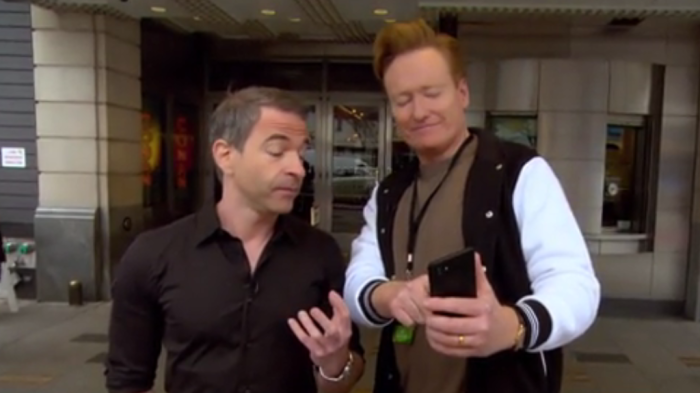
    TBS, a division of Turner, and Google Play today announced a year-long mobile gaming partnership to power the renowned gaming escapades of late-night series CONAN. As the first-ever, exclusive mobile gaming partner of CONAN, Google Play will fuel live-streaming stunts, mobile-led marathons and in-show brand integrations throughout the year.

    CONAN has become a leading late-night favorite among those in the video gamer community, who have helped turn the Clueless Gamer segments and Stream Coco weekly review show into viral sensations across the Team Coco website and social handles. Clueless Gamer features host Conan O’Brien and guests playing – or rather attempting to play – the hottest video games on the market. As part of the partnership, Google Play will serve as the platform of choice to bring the show’s gaming adventures to fans across all screens.

    “The meteoric rise of mobile gaming has led to a video game community that is more diverse, inclusive, and representative than ever before,” said Chris Connelly, Global Content Marketing Lead for Google Play. “Conan’s authentic personality and broad reach makes him the perfect partner to help tell that story, and show the increasing role mobile gaming plays in our lives. As huge fans of the show, we’re looking forward to showcasing the wide selection of fun and innovative games from major studios and indies alike on Google Play.”

    The partnership kicked off with an in-show brand integration during CONAN’s week of shows at the Apollo Theater in New York City. As Conan O’Brien rode to the theater with associate producer Jordan Schlansky, he was able to enjoy the commute with the accessibility of Google Play, or so he hoped. The video was shared and optimized across Team Coco’s social handles, generating over 1.7MM views to date on Facebook and YouTube.

    “As Conan continues to evolve the boundaries of his late-night show and build an incredible community of fans in the digital and social space, we’ve been able to take a true omni-channel approach to our partnerships with marketers,” said Jenn Cohen, Senior Vice President of Entertainment Content Partnerships for Turner Ignite. “This social-led, year-long campaign brings Google Play unique access to the show across all touchpoints, while also rewarding the fans with more of what they want – their favorite late-night gamer.”

    Next up in December, Team Coco’s accomplished gamer Aaron Bleyaert (better known as “Bley”) will dive into Google Play’s 2017 “Best of Play” list, revealing and reviewing the year’s top trending mobile games in a special edition of Stream Coco. On deck for 2018, Team Coco will attempt the show’s first-ever live mobile gaming marathon, where Bley will take on Google Play’s dynamic catalogue of games for 24-hours straight. Google Play will also road trip with CONAN for the show’s fourth annual appearance at San Diego Comic-Con.

    CONAN airs Monday-Thursday at 11 p.m. (ET/PT) on TBS and is produced by Conaco LLC, with Jeff Ross serving as executive producer. Since premiering in November 2010, the show continues to be a hit with young adults, consistently delivering the youngest audience of any late-night series. The show also continues to be a phenomenal success in the digital and social media arena, chalking up more than 3.4 billion video views, in addition to 70+ million views for Team Coco’s branded content with clips from CONAN’s nightly episodes, international excursions and Comic-Con shows drawing more than 1.3 billion views.

    On the social media front, O’Brien has 26.6 million followers on Twitter, making him one of the most-followed hosts in late night. Among the show’s other successes in digital arena, Team Coco and TBS earned an Emmy® for Outstanding Creative Achievement in Interactive Media.


    About Turner Ad Sales

    Turner Ad Sales monetizes the company’s portfolio of leading entertainment, kids, news and sports properties through award-winning advanced advertising capabilities that power return-on-investment for brands. Attracting a wide-scale audience of diverse fans, the collection includes leading media brands Adult Swim, Boomerang, Cartoon Network, CNN, Great Big Story, HLN, SuperDeluxe, TBS, TNT, truTV, Bleacher Report and Turner Sports’ high-profile coverage of the NBA, Major League Baseball, NCAA Division I Men’s Basketball Championship, ELEAGUE, UEFA and professional golf. In addition, the company has digital sales partnerships with the NBA, NCAA and PGA.

    About Google Play

    Google Play is an online store with millions of digital songs, movies, TV shows, apps, games, books and more. It’s a one stop digital entertainment destination where you have access to 40 million songs, thousands of new release movies and next day TV shows, millions of apps and games and thousands of news sources that can be viewed on any device – at home or on the go!


    Publicity Contacts

    Allie Bodack

    Turner Ad Sales

    212-275-6752

    allison.bodack@turner.com

    Joshua Cruz

    Google Communications

    619-829-4315

    joshcruz@google.com

    Watch for weekly news updates from Brand Storytelling in your inbox, and share this with other storytellers in your network.

    Of course, if you’d like to contribute to the story, We’d love to hear from you. Email us!
  • Re:thinking The Atlantic

    Re:thinking The Atlantic

    Atlantic Re:think is a uniquely positioned entity in the branded content space. Made up of journalists, producers, and analysts, Re:think takes its publication pedigree and leans into it, yielding work that is investigative, educational, and story-driven in nature. BrandStorytelling.tv caught up with Jeremy Elias, Creative Director at Atlantic Re:think, to better understand Re:think’s ethos, work, and future in this burgeoning space.

    What is Atlantic Re:think?

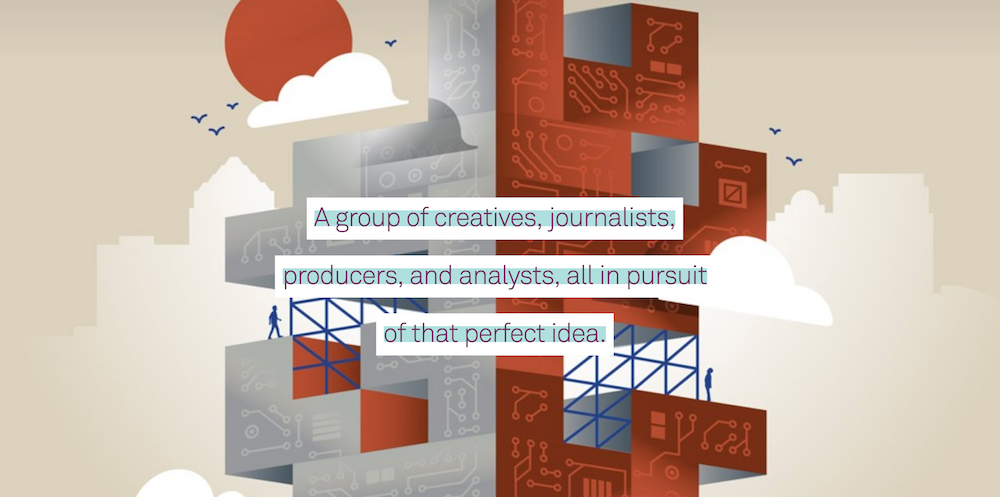
    Atlantic Re:think is the in-house branded content team for The Atlantic. We’re a group of 35+ strategists, reporters, designers, developers, producers and analysts, who apply the editorial sensibilities of The Atlantic to creative work for brands.

    How does the unique makeup of your team benefit the work you do?

    When you look across the team, you see people with backgrounds in journalism, advertising, academia, etc, all with their own broad range of interests and passions. That’s evident in the day-to-day work at Re:think, as well as in the team’s personal projects outside of work: a recently released book on American sports culture, a documentary on women-led communities, a published interview with Iran’s most iconic entertainer, or a newsletter on the issues faced by women of color.

    Whether sitting in a brainstorm, or sitting in a film edit, those passions and experiences almost always benefit the creative process; they yield smart, authentic, novel, informed ideas. Never has that been more important than today, when brands are looking to have more substantial, socially-focused conversations with audiences.

    Our success as a content studio will depend on finding more people with a diverse range of passions and experiences. It’s sort of the antidote to what advertising has been guilty of for so long — promoting a certain conformity around creative thought — looking for folks from a handful of the same ad schools, judging their value on a handful of awards.

    You seem to have a firm grasp on the notion that the internet audience is a discerning one… how do you access rather than alienate a generation that approaches brands with such scrutiny?

    I don’t think this is a particularly novel view, but audiences approach any form of content asking“What’s in it for me?” Today, the answer to that question has to be more compelling than it’s ever been. With branded content, the answer cannot be “You get to learn about our product.” Brands will fail in that world. The answer has to be “We’re going to entertain you.” or “We’re going to teach you something about an important topic.” or “We’re going to give you a tool that can help you do X”. And in getting there, you need to figure out the role of the brand. Maybe the brand is using their proprietary data, providing access to experts, or maybe they’re using their capital to fund this amazingly important story.

    Learn more about Atlantic Re:think

    What are some of the other challenges you face when working to meet and exceed the high standard set by the longstanding excellence of The Atlantic?

    The first challenge is simple math. There’s more creative work being developed today than at any previous time, and that inevitably means it’s harder to find a unique idea. The second challenge is that The Atlantic’s brand of journalism and creativity is about asking, “How do we challenge the typical approach to this topic or brief?” That often means taking risks, being a bit provocative, deviating from what we’ve always done. That can be a scary proposition for some marketers. The third challenge comes with the reality that Branded Content teams within publications, and the type of creative work we’re developing, is still relatively new. Yet the general relationship between Publisher/Agency/Advertiser hasn’t necessarily evolved. In many instances, we’re still working with 24 hour turnaround times on RFPs, or the creative ideas are being evaluated by the same folks being tasked with analyzing a media plan. As a whole, we all need to help reshape the publisher/agency/advertiser relationship.

    Work with brands like HBO, Netflix, and Microsoft suggests that there’s a desire to partner with brands who have strong storytelling roots. How does that play in to the work you do with and for them?

    Brands like HBO and Netflix have storytelling at the root of the products that they create. That can make the work better because there’s a shared language or sensibility; lead with story versus lead with sales pitch. But today, almost every brand can point to a larger cultural or societal narrative that transcends their product or service, from Burger King to State Street Capital.

    What’s on the horizon for Atlantic Re:think?

    It’s about developing increasingly ambitious work while retaining the core tenets of great Atlantic journalism. Four years ago, we were developing branded articles. Since then, we’ve developed a whole slate of really strong video programs, branded events, and campaigns that leverage new technologies like Google Tilt Brush and VR. Next, I see us using our expertise and talents to move beyond the typical branded content relationships: everything from helping companies with product development to producing original programming.


    Check out some of Atlantic Re:think’s work

    HPE – Moral Code: The Ethics of AI
    At a time when some are recklessly celebrating the promises of A.I., HPE and Re:think addressed the most consequential questions surrounding A.I. in a 8-minute documentary.

    Netflix’s Fauda – A Land Divided
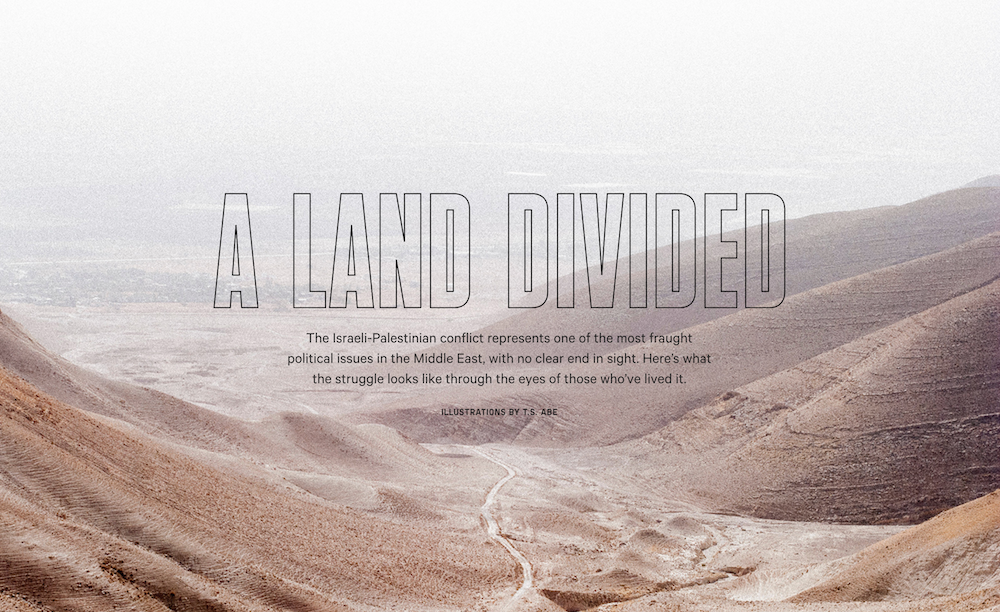
    Coinciding with the launch of Fauda-Season 2, we produced an intensely researched and reported feature that takes readers on a historical journey of the Israeli-Palestinian conflict.

    Trivago – Honeymoon Sequel
    To celebrate the importance of travel in our personal relationships, we brought Hank and Dotty Viola, married over 57-years, back to Miami Beach to recreate their honeymoon.

    About Jeremy Elias:

    Jeremy Elias is the creative director of The Atlantic’s in-house studio, Atlantic Re:think. In that role, Jeremy oversees all ideation and execution for Re:think’s largest content programs. In 2018, he was named Content Marketer of the Year at the Digiday Content Marketing Awards.

    Watch for weekly news updates from Brand Storytelling in your inbox by subscribing, and share this with other storytellers in your network.

    Of course, if you’d like to contribute to the story, We’d love to hear from you. Email us!
  • What is Elevate? Advisory Chair Todd Barrish Breaks it Down

    What is Elevate? Advisory Chair Todd Barrish Breaks it Down

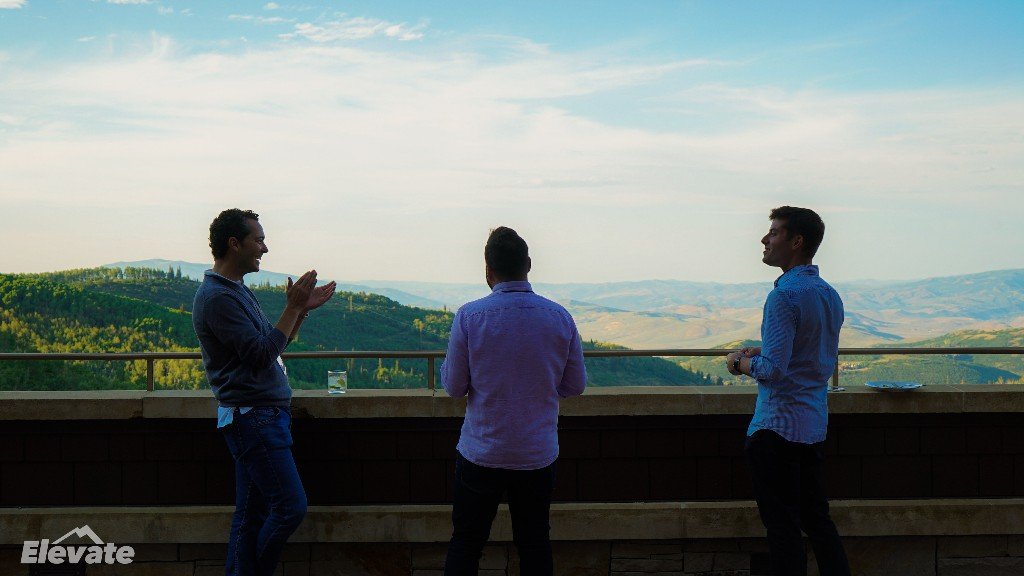
    Taking in the view of Deer Valley, Utah

    Pictured: Shane Maidy (Polymath), Todd Barrish (Polymath) and Andrew Serby (Zefr)

    Todd Barrish is an industry leader working broadly within the advertising/content space for nearly 20 years. Currently the Co-Founder and Managing Partner of Polymath Group, a content-centric consultancy, Todd previously served as EVP, Creative Partnerships at Endemol Shine Beyond, spearheading the development and sales of digital formats. Prior to Endemol, Barrish served as SVP, Global Strategic Partnerships at Maker Studios, where he led the team that launched the company’s programmatic native content technology solution. Before Maker, Barrish was VP, Sales for Digital Broadcasting Group and the Rich Media Team Lead for Google/Doubleclick.

    As Chair of the Brand Storytelling Advisory Board, Todd is leading the content development and agenda for Elevate, the annual summer retreat for brand storytellers and their partners. We connected with Todd to get the ins and outs of what to expect at Elevate:

    Can you give our readers a brief background on Elevate, how it came to be and the mission that drives this event?

    Of course! Elevate was the direct output of conversations started at Brand Storytelling at Sundance in 2016. The idea was to mobilize the Brand Storytelling community to dig deeper into the mechanics and greater purpose of brand funded content initiatives. That mission, to “elevate” the business of brand storytelling through working sessions with thought-leaders and trail blazers, is what truly sets this event apart.

    What did you discover from the 2017 event that is guiding the content development and agenda for 2018?

    The biggest takeaway is that the definition of Brand Storytelling is ever evolving. We are no longer simply talking about short form video series, influencers, etc… but, rather, the expanding universe of mediums from streaming/OTT to Podcasts to Cable to Social and beyond. With the widening of the definition, the conversations around format specific production, distribution and measurement have never been more necessary in driving the growth and maturation of the industry.

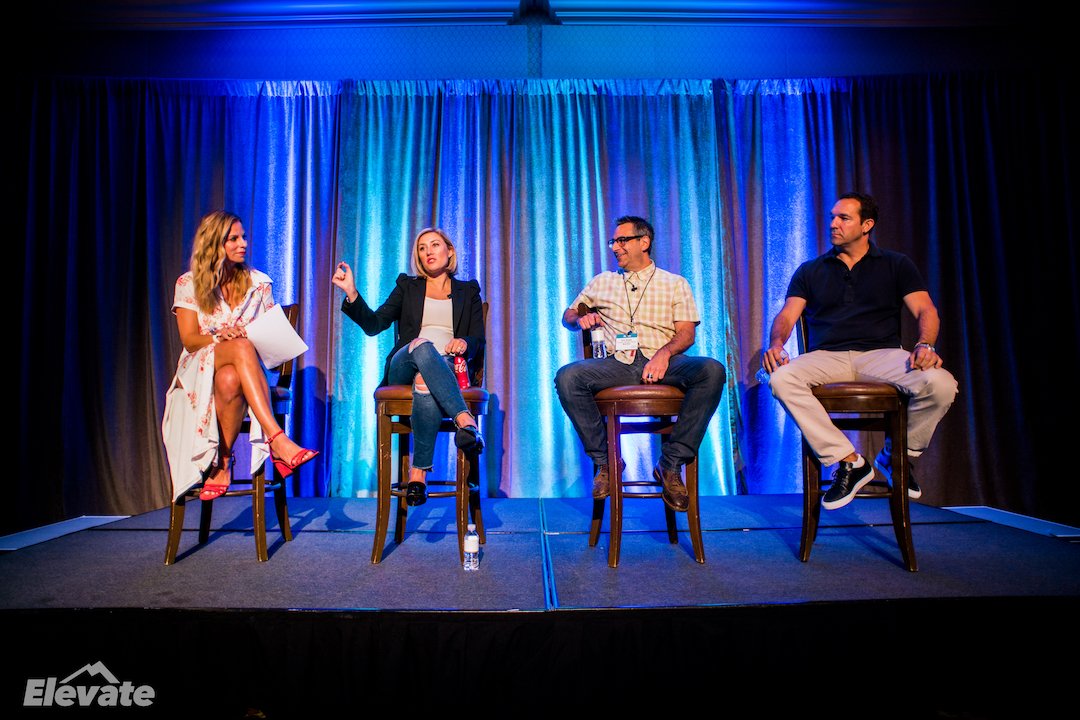
    Presenters take the stage for ‘Trail 1 – Setting the Scene’

    Pictured: Shannon Pruitt (The Story Lab), Kate Santore (Coca-Cola), Eric Korsh and Chip Russo (Zefr)

    Can you describe the “Trails” that have been created for Elevate 2018 and the process the advisors went through to establish them?

    As with everything with Brand Storytelling, the content is truly the result of the advisory board’s expert guidance and stewardship. For 2018, we are going to focus the conversation on the consumer experience, how brands and agencies choose to create and support projects and tactical discussions around distribution points and measurement. We’ll be taking attendees on a journey from the inception of a content strategy through the post campaign measurement. The event will kick-off with a brand panel focused on consumer experience planning, and from there we’ll dive into the trails starting with INVEST – which will explore how marketers and agency partners decide which formats, mediums and content initiatives they put their money behind, SUPPORT – in which we’ll dig into the question of buy, build or borrow, DISTRIBUTE – in which we’ll explore how you ensure your content has the right scale and is reaching your target audience, and, finally, MEASURE – where we’ll look for the common denominator in measuring content efficacy.

    What sort of outcomes do you expect from the discussions?

    Our hope with this retreat is that all in attendance come prepared with questions and insights on relevant topics, with the ultimate goal of helping the industry move toward more standardization in the business of content creation, distribution and measurement. Last year we had lively and constructive conversations on each trail, and we hope the content this year spurs even more dialogue and action.

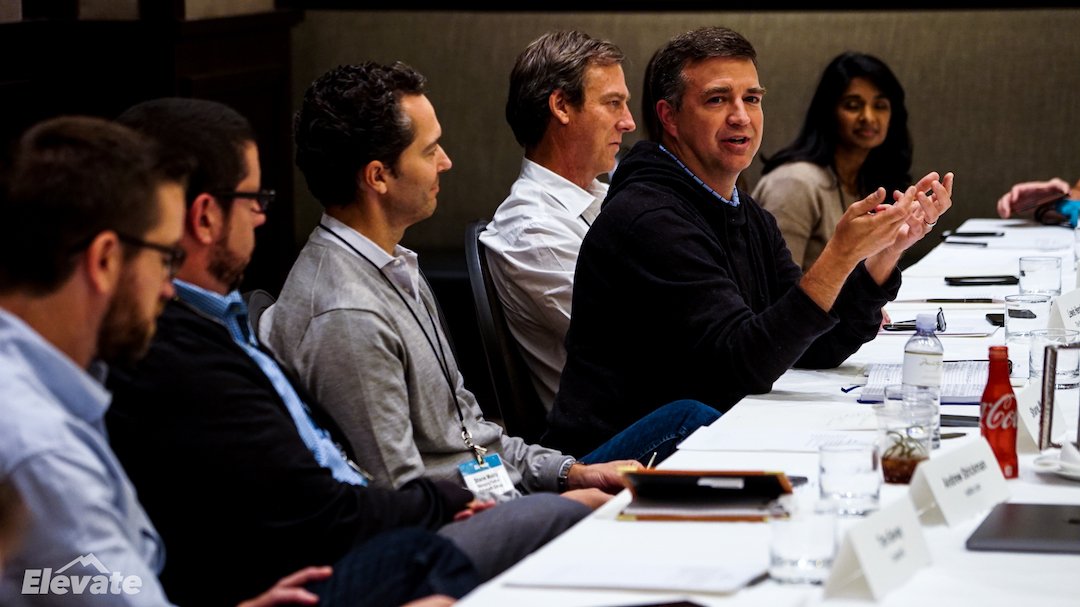
    Kevin Brown (SVP, CMO at Sleep Number) has the floor as attendees discuss and unpack the day’s panel presentations.

    How are partners involved in the content planning?

    It can’t be stated enough – this is a participatory event in which we look to build a community of thought-leadership in all facets of brand storytelling. That includes content input from not only the advisory board, but partners as well. There is no industry without the distributors, measurement partners, media co’s, creatives and technology platforms.

    Besides the planned presentations and working groups, how much deal making and networking time is being planned?

    Outside of the content, it’s really the network of peers that makes this event so valuable. We’ll be planning a careful cadence of programming and networking time so that we can allow connections time to develop and flourish. Additionally, the Brand Storytelling team will be organizing a number of group activities to foster new connection and build lasting bonds – old and new.

    How many of the advisors will be participating at Elevate this year?

    This year we have participation from 21 advisors across the agency and brand spectrum… and miraculously we’ve had luck in making conference calls work on a consistent basis (hope I didn’t just jinx things!).

    Watch for weekly news updates from Brand Storytelling in your inbox by subscribing, and share this with other storytellers in your network.

    Of course, if you’d like to contribute to the story, We’d love to hear from you. Email us!
  • Helping Brands Tell their Story

    Helping Brands Tell their Story

    Last June, CNN announced the launch of Courageous, their in-house branded content studio designed to leverage the storytelling skills and distribution capabilities of CNN and HLN news brands. Otto Bell, previously Creative Director for Ogilvy Entertainment was pegged to run the studio, reporting to Michal Shapira, Senior Vice President and Head of Integrated Marketing for CNN. We caught up with Otto and Michal at the CNN Lounge at Sundance back in January, and they shared their thoughts on how Courageous will support brands seeking to engage audiences with great content, versus interruptive messages. Check out the interviews with Otto and Michal here.

    CNN is certainly not alone when it comes to media companies launching branded content efforts to help advertisers who are increasingly seeking alternatives to the 30 second spot, pre-roll, post-roll, interstitials, and other interruptive ad units. Afterall, who better to help brands imagine, find, and produce content that will resonate with target audiences than media companies? I mean…like, that is their business! They are trained storytellers, journalists, and producers of compelling content. It all begs the question, now more than ever; who does what in this media world of blurred lines? Whereas agencies once were the crafters of brand messaging and creators of content, advertisers are realizing that when it comes to branded content, media companies may be the best solution. At least some of the time…

    Case in point; Saturday Night Live just announced that it would cut back on commercial time by 30% while offering advertisers the opportunity to partner with “SNL” to create original branded content.

    ‘Saturday Night Live’ Will Cut Ads by 30% Next Season

    ‘Saturday Night Live’ To Run With Fewer Ads Next Season

    And, as reported by ADWEEK, “The company has launched The NBCU Content Studio. It will develop and produce content for advertising clients utilizing NBCU’s creative talent, data, distribution, and scale (including its partners BuzzFeed, Vox, and AOL)”

    NBCU’s New Studio Is Creating Branded Content for Viewers Beyond Its Own Platforms

    This trend of media companies partnering with advertisers to create content that is not advertising, is only going to gain speed and further blur the generations-old roles of agency-client- media company.

    Here are more examples of some notable brand content studios:

    USA Today

    Scripps Lifestyle Studio

    Meredith Excelerated Marketing – MXM

    BBC Storyworks

    Viacom Velocity

    AOL Partner Studio

    Time Inc. Foundry

    Watch for weekly news updates from Brand Storytelling in your inbox, and share this with other storytellers in your network.

    Of course, if you’d like to contribute to the story, I’d love to hear from you. Email me: Rick@BrandStorytelling.tv

  • Mondelez International Jumps on the Content Wagon

    Mondelez International Jumps on the Content Wagon

    Just two weeks ago, it was Pepsi making headlines with the opening of their Creators League content studio, in New York. “Our goal is to really behave like a Hollywood studio,” said Brad Jakeman, President of PepsiCo’s global beverage group. “The holy grail for me is to leverage the incredible power of our brands and their equities to essentially fund their own marketing,”

    This week, it is Mondelez International joining the ranks of advertiser-turned-media company. The lines of media demarcation are beginning to look like red-clay marked lines in the 5th set of a match at the French Open.

    I met Laura Henderson, Global Head of Content & Media Monetization for Mondelez, while she was attending Brand Storytelling at Sundance Film Festival 2016 this past January. In preparing for our interview with her, I asked about the “media monetization” in her title. The answer was simple, “we intend to create content good enough to make money.”

    This week, Laura and the team at Mondelez are lifting the veil a bit to reveal the strategy behind their thinking. “We’re shifting from a media buyer to more of a content producer and investor.” And here’s why; “The audience is in the driver’s seat; choosing when, how, and where to watch content. They can skip ads, block ads, and avoid ads in their entirety. Advertising is no longer an assumed part of the content consumption equation. It’s wreaking havoc on the economics of the industry.” Says Ms. Henderson.

    Besides Pepsico and Mondelez, add Marriott to the list of advertisers intent on creating content that does more than sell soda pop, cookies and hotel rooms. Just watch this video with David Beebe, VP Global Creative and Content for Marriott:

    Brands everywhere will be watching how these plans unfold in the coming months and years. If paid media, aka “interruptive” is an increasingly expensive and ineffective means to persuade consumers to buy your stuff, then will shifting part of those media budgets pay bigger dividends? Mondelez advertising spend was $1.5 billion in 2015, according to their annual report.

    There are many questions to be asked and the answers won’t be revealed until sometime in the future. One thing for sure, the world’s largest advertisers realize that business as usual is not going to produce the same results. We will see more and more brands investing in content creation and distribution schemes in an effort to maintain and strengthen their market rankings and sales.

    Coming Next Week! Episode 1 – Brand Storytelling

    There is a big story unfolding and we will do our best to bring it to you. Last week, we released the trailer for Brand Storytelling: A Docu-Series. Next week, we will publish the first of five volumes, which will live on the BrandStorytelling.tv YouTube Channel. These [20-30 min] volumes feature interviews with marketers, agencies, filmmakers, media companies, influencers, and more. Set some time aside, tune in with your team, discuss amongst yourselves, and enjoy. These shows should be discussion starters for agencies and brands intent on making a successful transition from interruptive advertising to creating content that delivers value first.

    So Subscribe to our YouTube Channel, and keep up with the latest videos and posts!

    Mondelez Makes Moves to Look More Like a Media Company

    Mondelez Dives Into Content Creation in New Media Approach

    Mondelez to create more apps, online videos in advertising shift

    Stride Gum Presents Heaven Sent: A Mad Intense Jump

    Watch for weekly news updates from Brand Storytelling in your inbox, and share this with other storytellers in your network.

    Of course, if you’d like to contribute to the story, I’d love to hear from you. Email me: Rick@BrandStorytelling.tv

  • Meet the Advisors: Austin Schumacher of Lyft

    Meet the Advisors: Austin Schumacher of Lyft

    Since 2013, Austin Schumacher has overseen entertainment marketing and content at Lyft, leading the development of Lyft’s branded entertainment program. Amongst Lyft projects like Kevin Hart: Lyft Legend and June, you may have heard (over and over again, given the series’ nearly 40 million cumulative views) of the largely successful series Undercover Lyft, in which famous athletes and celebrities pose as Lyft drivers, ultimately revealing themselves to their unsuspecting riders. In addition, Schumacher has been responsible for Lyft’s influencer marketing program and Lyft’s studio co-marketing activations for films including Ghostbusters and Back to the Future.

    Brand Storytelling connected with the man behind the wheel of these many successful content operations to get a better understanding of where Lyft’s inspiration comes from, where its creative is headed, and what company growth means for Lyft’s content future.

    How has Lyft’s content plan grown and changed since the early days of Undercover Lyft?

    Our overall goals haven’t changed from the start in that we want to find unique ways to tell our story while contributing meaningfully to culture. Over the last few years, we’ve done this through owned and partner content, and we’re always looking for new ways to communicate our message. That could be through new formats, a unique partner, or uncovering new insights that lead to great creative ideas. We’re thinking about content differently these days in how we engage with partners, whether it be co-producing content or looking at integrations as a way to play a different role in the world of entertainment.

    You have such entertaining and versatile content, from June to Kevin Hart: Lyft Legend. Where does your inspiration come from?

    We have an incredibly talented internal creative team that drives a significant portion of our content. We also look to outside partners where it makes sense to tap into new audiences and develop ideas that might have a different tone or perspective on a creative idea.

    What is the most critical factor you consider before moving forward on a new piece of content?

    We always need to stay grounded in our values, and make sure that our content reflects positively on our passenger and driver communities.

    Fortune Mag recently stated that Lyft could have one third of the US rideshare market by Christmas. What does this mean (if anything) for the future or Lyft’s content marketing?

    It’s an exciting time for the industry as a whole and we’ve had a very productive year. With a lot of momentum heading into 2018, we need to stay focused on the message and continue pushing into new creative territory. We’re growing the team throughout the year (shameless plug in case anyone’s looking…) and can’t wait to share our new work!

    What are you looking forward to seeing and hearing at Brand Storytelling at Sundance film festival 2018?

    It’s a great group lineup this year and I’m excited to check in with old friends and meet the new folks we haven’t seen the last couple of years. Content-wise, I’m excited for the new MacGillivray film, America’s Musical Journey. See you guys out there.

    Hear more from Austin Schumacher and the rest of our advisory board in January during Brand Storytelling at Sundance Film Festival 2018. Please visit our website for more information on how you can attend this one-of-a-kind event.

    Watch for weekly news updates from Brand Storytelling in your inbox by subscribing, and share this with other storytellers in your network.

    Of course, if you’d like to contribute to the story, We’d love to hear from you. Email us!

  • What’s Next? VirtualFronts? Thoughts on this month’s NewFronts, and innovations in Virtual Real

    What’s Next? VirtualFronts? Thoughts on this month’s NewFronts, and innovations in Virtual Real

    I’m writing this on an airplane, flying back to California from an invigorating week of NewFront presentations, and visiting 1:1 with media execs at their offices. The shear amount of video content being touted by the forty NewFront presenters is stunning, but what I found most intriguing; is the promise by these media companies, to produce and distribute virtual reality content- all sorts of it; news, documentaries, live events and scripted shows that invite viewers to step right into the story. There is a ton– make that many tons of investment dollars directed at VR technologies, and now the content that will make it, well….real!

    Sitting in the office of a biz-dev executive at a major media company last week, I looked around and saw several VR headsets. He picked one up, easily shoved his smartphone in it, thrust it towards me and declared, “This wave is real. The next nine months will see tremendous advancements in VR programming and acceptance.” I think I believe him.

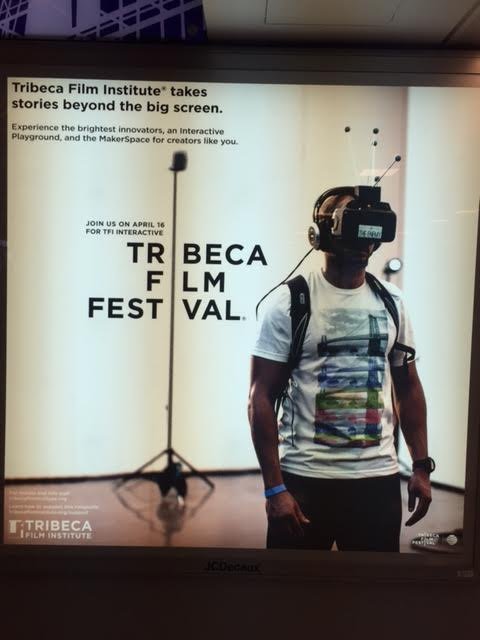
    Walking to my gate at JFK this morning I stopped in front of this poster.

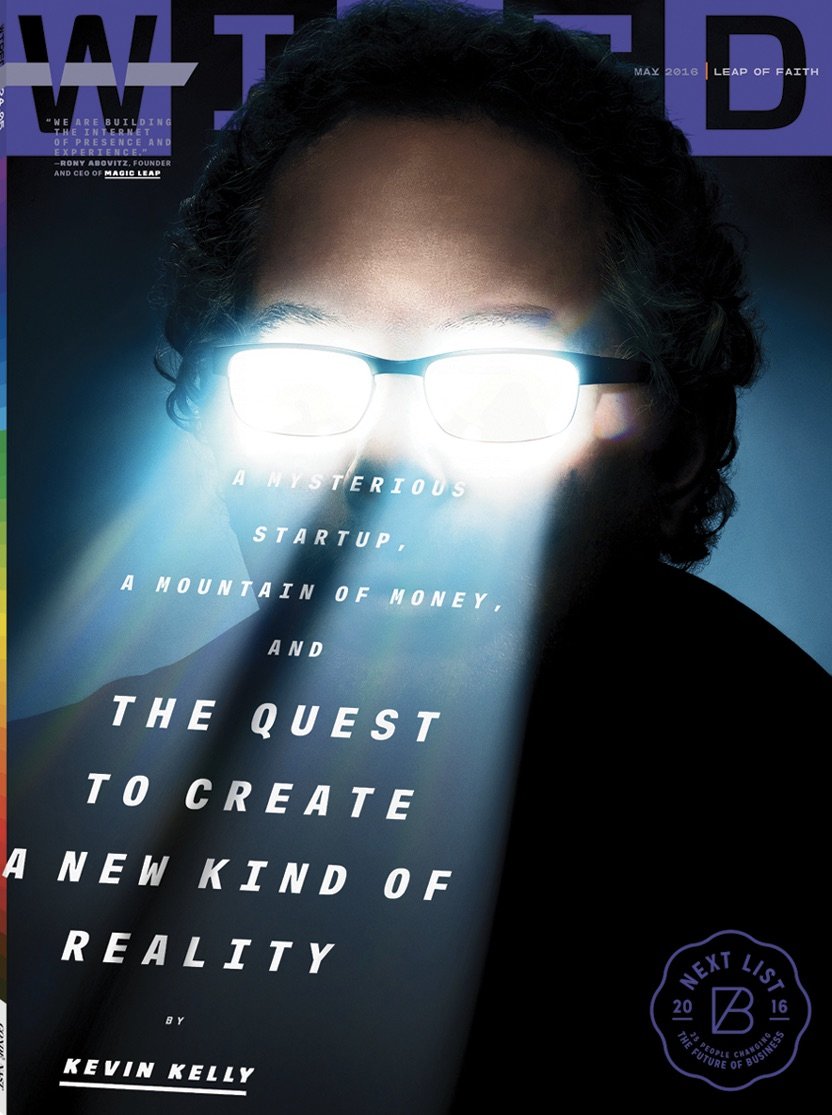
    I stood there for awhile, pondering over the image and all that I had just heard as I beat around NYC. “This wave is real,” I kept thinking. I stopped and picked up the May issue of Wired and, of course, the cover article screamed out at me; “The Quest for a New Kind of Reality.” I devoured the piece by Kevin Kelly, the founding Executive Editor of Wired in 1992, and a guy that has been following VR technologies since 1989. If you aren’t sure about VR and the immersive future, I invite you to read Kevin’s article now before this rising wave crashes down upon you unexpectedly.

    The Untold Story of Magic Leap, the World’s Most Secretive Startup

    As I sit her now at 30,000 feet, I wonder, what’s next in the way of “Something-Fronts?” A VirtualFront? What might that look like? Heck, you wouldn’t even need to leave your home or office, just don the headset and be virtually transported to immersive presentations. No trans-continental travel. No in and out of Ubers and cabs, no standing in lines 8 blocks long hoping to get a seat where you might actually be able to see. It wouldn’t discourage people from attending in person, but it would surely expand the audience beyond New York City.

    For brands and their agencies, there is a lot to figure out here. How will brands integrate messaging within a virtual experience? How will the industry keep awful ad practices out of the VR realm? Can you imagine what annoying ad units could fly at you in the middle of an immersive session? Would make popups and interstitials seem like reasonable advertising. I think the message is clear, this wave is for real and we all better get ready for a truly gnarly ride!

    Not convinced the VR wave is real? Check out these articles:

    New York Times Doubles Down on Virtual Reality at NewFronts

    After Experimenting With 360-Degree Storytelling, Publishers Are Going All-In on VR

    National Geographic Readies First Instagram Video Series for Its 49 Million Followers

    Refinery29’s Second NewFront Heavy on VR and Data

    Live concerts could be just the ticket for virtual reality

    Unilever CMO Keith Weed: ‘We are shooting VR content for a lot of our brands’

    NextVR and TIME Inc. Partner to Bring 360 Content From Major Magazine Brands

    Watch for weekly news updates from Brand Storytelling in your inbox, and share this with other storytellers in your network.

    Of course, if you’d like to contribute to the story, I’d love to hear from you. Email me: Rick@BrandStorytelling.tv

  • Takeaways on Elevating the State of Brand-Funded Content

    Takeaways on Elevating the State of Brand-Funded Content

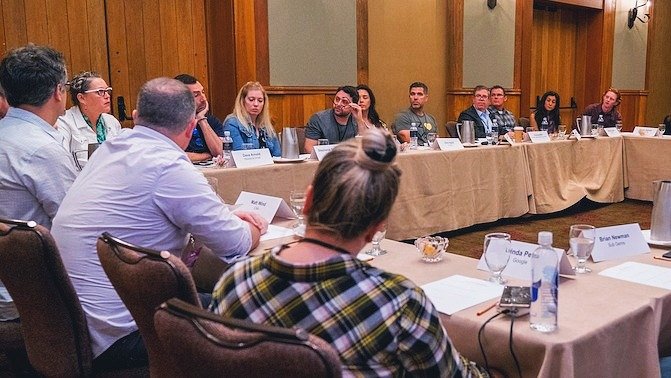
    Elevate, the industry-building retreat for brand marketers and their partners, was designed to address the opportunities and challenges facing marketers in a media environment where interruption is increasingly less effective. The Elevate Trails addressed these opportunities and challenges, each featuring a group of hand-selected advisors and partners whose strengths lie in the investment, support, distribution, and measurement of brand-funded content. Each of these topics was introduced and discussed on stage by an expert panel, followed by breakout sessions in which small group conversations amongst industry leaders aimed at developing best practices, strategies and tactics took place.

    I took the opportunity to sit in on these discussions and hear what the people at the heart of the content marketing world are really talking about, from what excites them to what’s holding them back and everything in between. The following is a distillation of the discussions on the subjects of investment and support into the most salient points necessary for brand marketers to be effective in their pursuit of creating effective brand-funded content for a marketing purpose.

    As interruptive messaging becomes less effective, how do we choose what to invest in? How do we evaluate content, formats, medium? This discussion focused on how to make the right investment decisions. There are a lot of choices out there for marketers with constant innovation and an ever-expanding palette of mediums and formats – contributors discussed how to evaluate the landscape, from content types and formats to partners and platforms:

    • Last year, conversations revolved around 6 second video and keeping content short. But in that time, things have changed. Today, more brands and creatives are getting away from social only bite-size video and are focused instead on longer form “legitimate” content.

    • While format and platform trends have changed, the content goal remains the same: to connect emotionally with the consumer.

    • An idea alone is not enough to present when seeking investment

    • ​Doubling down on data at the investment stage brings strength to a pitch.

    • Measuring performance and recycling it back into data collection can provide long-term value for additional projects.

    • Building in a monetization component will appeal to the C-suite as well as improve the ability to measure content performance upon completion.

    • Leading with what you intend to measure and how by setting objectives and KPIs is essential when pitching the C-suite.

    • Be clear upfront – brand-funded content and commercials are not the same, and therefore shouldn’t be budgeted the same way.

    • Setting clear intentions about the content itself will help justify costs, high or low as they may be.

    • The emergence of new creative shops is matched by the number of in-house teams being developed, and with that the internal debate about what gets done in-house and what gets contracted out is likely to occur. The decision can be tough but should be made on a case-by-case basis.

    • Putting TV spots online isn’t enough.

    • Content should be designed for where it intends to live and should be invested in as such.

    • Direct-to-social, OTT, etc. should be planned for and invested in expressly from the outset.

    • The old adage still applies – you have to spend money to make money.

    • Appropriate early investment with intent to spend on amplification is important.

    • Specify your audience.

    • ​Identify your brand’s “fandom” and build an investment and content strategy around it.

    • Although the trend has swung in favor of longer form content, the debate over long form vs. short form content is inevitable.

    • Consider the shelf life of the content being produced as well as the half-life of the distribution platform when making this choice.

    • Short-term content strategy and investment may require an appeal to the C-suite, but times are changing and so is leadership. Long term content plans may very well outlast the C-suite.

    • Don’t forget that brands have power in the rights and production process, more than many realize.

    How are brands building their internal teams and how do they expect their external teams to be staffed? How do we look at human capital in the face of efficiency from both a cost and time perspective? This discussion revolved around organizing content, creativity, and how brand stories are planned for and produced in the new world of people, platforms and technology, understanding the opportunities and challenges that executives face internally as much as externally, and ways to frame the best approach for brands:

    • Know your audience: when troubleshooting perception problems, a better explanation of the audience is required.

    • A misunderstanding of the target audience could result in not winding up with an RFP.

    • At the end of the day, people want to work with companies that share their values.

    • Look to find common ground early and establish it.

    • Know the difference between collaborating and meddling and call it out when you see it (constructively, of course).

    • This tends to happen when brands and creatives collaborate in the pre-production phase.

    • The key is to identify and diffuse the situation. Try giving the “meddling” party something relatively inconsequential overall but pertinent in the moment to focus on so that they get their win.

    • The support step can be simple when everyone on board is of the current culture, but often times agencies and other groups are still coming from the world of traditional advertising, television, etc.

    • Brands and agencies alike need to stop approaching collaborations from the television point of view and see the multifaceted new media landscape for what it is. Help them do this.

    • Build great arguments – utilize the news, data trends, examples of partnerships or other brands to help the c-suite and agency partners see the value in and bet on branded content.

    • When outfitting a creative team, pull in support from your personal connections.

    • Seek talent that aligns with your creative and marketing vision for achieving brand-funded content for a marketing purpose.

    • Take control of the situation by exercising aggressive prioritization in order to do the best of what needs getting done more efficiently.

    • When faced with adversity in the conference room, put the consumer in the middle of the conversation.

    • It’s hard to argue with what’s best for the consumer when that should be everybody’s bottom line.

    • When internal team members make their exit, hire digital centric, customer centric replacements that understand the vision for the new media era.

    • In time, the majority of your team will convert to the new media mentality or will have had it upon entry.

    • “Rent with the option to buy” – seek out individuals on a project basis that have the potential (once vetted) to become full-time team members.

    • A well-rounded support system for generating branded content means having the production end that’s flexible and open to the new media model, creatives and writers who can tailor bespoke content for brand-funded campaigns, and team members whose sole focus is on the client experience for troubleshooting.

    • It’s imperative that creatives from both sides of a partnership collaborate.

    • It’s a direct pathway to enhanced communication between partners and often yields the ideas that best fit both ends of the partnership.

    • Make an effort to reduce the number of briefs changing hands.

    • Briefs should be content-specific with budgets, mandatories, etc. tailored to the capabilities of the partner.

    • Opening a dialogue with fewer briefs to focus on will almost always get you to a more desirable result more quickly. — Next Week: Part 2 ft. the best of “Distribute” and “Measure”


    About Jordan Kelley

    Jordan Kelley (Content Director, Brand Storytelling) is a writer/editor intent on mapping new media trends and disseminating the most relevant information in the world of branded content.

  • Welcome to Park City!

    Welcome to Park City!

    Brand Storytelling attendees celebrating opening night at the Turner Reception

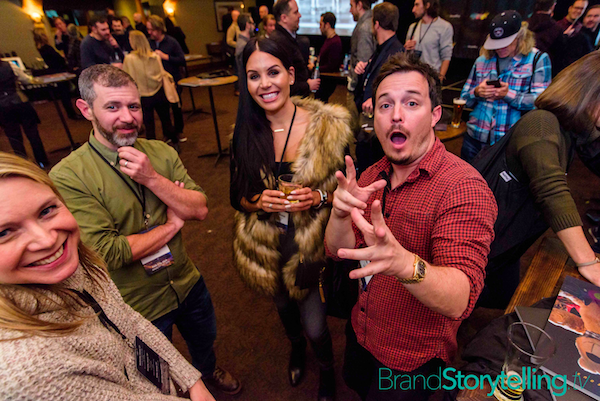
    Wednesday night marked the opening of Brand Storytelling: A Sanctioned Event of the 2018 Sundance Film Festival. As Park City gets ready for Sundance, the best and brightest creatives, brands, and agencies gathered to open this year’s celebration of the best brand-funded content, kicked off by an incredible welcome reception hosted by Turner Networks.

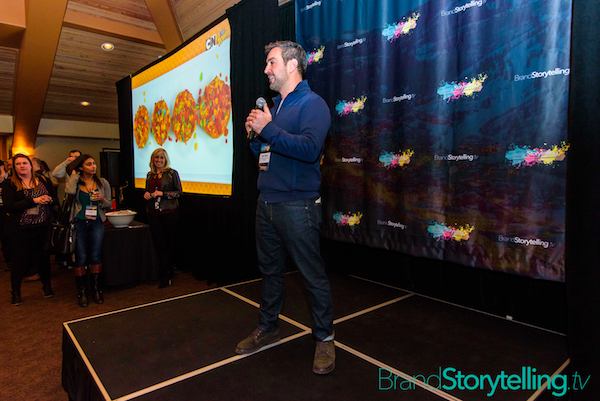
    Dan Riess delivers opening remarks to the audience at the Turner Reception

    Opening remarks from Rick Parkhill (Co-Founder & Director, Brand Storytelling) and Dan Riess (Executive Vice President of Content Partnerships, Turner) gave way to the Turner Brand Experience, which featured cocktails, conversation, confections, and collections of viewable media from TruTV, TBS, Super Deluxe, Great Big Story, CNN, Bleacher Report, and adult swim, all networks under the Turner umbrella. Guests mingled and engaged with interactive installations all while being treated to themed treats, drinks, and swag.

    Thanks again to Turner for a wonderful start to a wonderful event.

    Watch for weekly news updates from Brand Storytelling in your inbox by subscribing, and share this with other storytellers in your network.

    Of course, if you’d like to contribute to the story, We’d love to hear from you. Email us!
  • Patagonia Goes to Washington

    Patagonia Goes to Washington

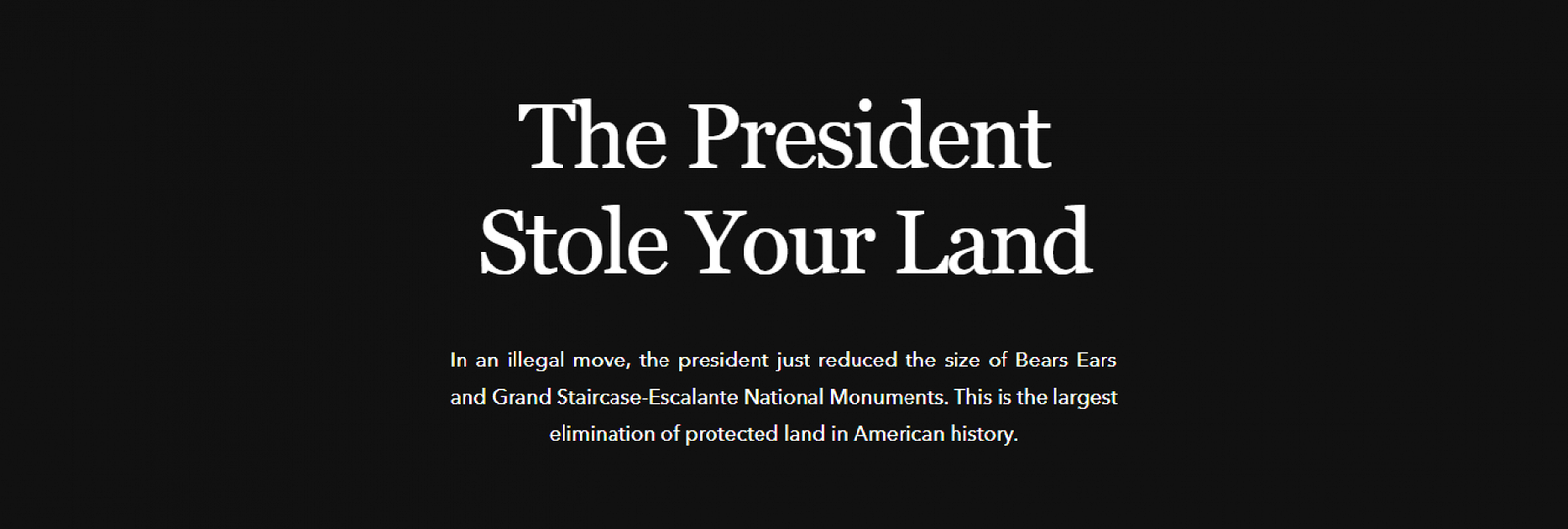
    Unless you’ve taken a “no screens” challenge this week or are living under a rock, you’ve likely seen Patagonia’s stark, black banner with white text reading, “The President Stole Your Land,” going around the internet. After the President shrank two national monuments protected by federal law this week, the outdoor goods brand has made it their mission to inform the public by displaying their black banner on their website and social channels, and are going so far as to sue the U.S. Government for unlawfully shrinking the size of the two Utah nature areas in question, Bear Ears and Grand Staircase Escalante.

    Brands standing up for social issues is nothing new, but this instance is different, even special, because it is Patagonia’s most subversive and disruptive piece of marketing to date. The banner itself has been shared hundreds of thousands of times on Instagram and other social platforms, often by people who don’t even know where the banner originated from. The act of creating and placing this banner strategically has resulted in its widespread visibility and success in the spread of a message that would have otherwise potentially gone unknown by mass swaths of the population. Patagonia’s strategy has been a hit, but it’s important to examine what the strategy was in the first place.

    The key to the entire endeavor is that Patagonia is genuinely, authentically, meaningfully putting “land before brand.” They are taking the government to court. The company isn’t pulling a stunt in an attempt to appear to fight for the country’s national parks and landmarks, they’re just fighting for them, period. Brand respect (and subsequent brand loyalty) is not the brand’s goal, but a happy side-effect. Brands like Patagonia, REI, and The North Face are using the President’s land decision to challenge the notion that claiming to stand for what your brand says it believes in isn’t enough – that actions resonate with the people more than words. Social responsibility can be an opportunity, not to pander to a brand’s audience, but to prove to that audience a brand’s mettle. And in 2017, amidst the flailing and flying accusations of fallacy and hypocrisy, few things are more important than real integrity.


    Related Articles:

    AdWeek
    Patagonia Is Suing the White House as Companies Like North Face and REI Take a Stand for Public Land

    Time
    Patagonia CEO: This Is Why We’re Suing President Trump

    The New York Times
    Patagonia, REI and Other Outdoor Retailers Protest Trump’s Decision to Shrink Utah Monuments

    Watch for weekly news updates from Brand Storytelling in your inbox, and share this with other storytellers in your network.

    Of course, if you’d like to contribute to the story, We’d love to hear from you. Email us!